


search
date/time

Sun, 10:00PM
scattered clouds
8.6°C
8mph
scattered clouds
8.6°C
8mph
 | Sunrise | 6:37AM |
| Sunset | 5:01PM |  |
P.ublished 24th February 2025
scitech
Opinion
AI In Education Takes Centre Stage In Leeds
Dominic Gore, Sr. Director, Anthology
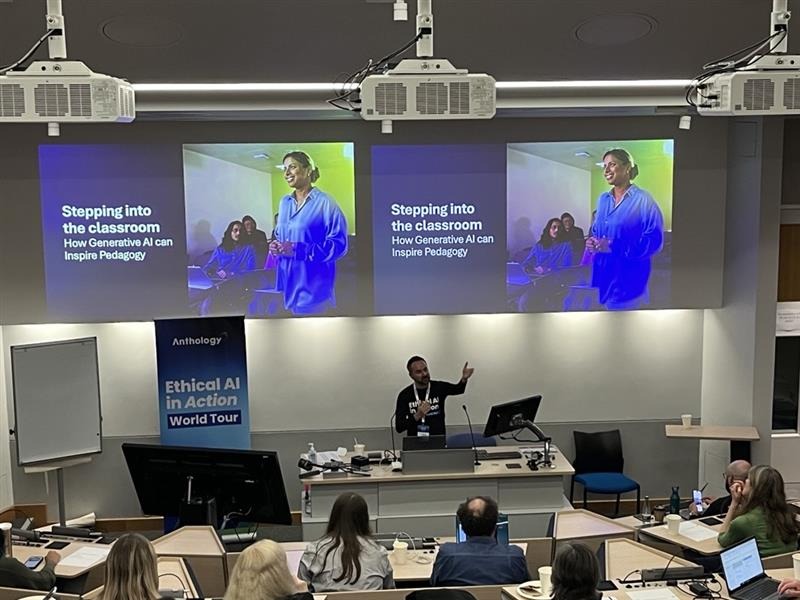
The event was part of EdTech company Anthology’s Ethical AI in Action World Tour, which brought almost 2,000 education professionals from around the globe to discuss the crucial topic of AI in higher education. The tour had a total of 25 stops, including Sydney, Chicago, Nairobi and of course, the University of Leeds. It aimed to review the development of AI technologies and discuss how they can best be used within higher education and was also an opportunity for education professionals to share best practices and explore broad principles for ethical AI frameworks.
Universities are adopting AI tools to help create engaging and personalised learning experiences for students and ease the burden of administrative tasks so that faculty can focus on what they do best – teaching. However, while AI undoubtedly brings a wide range of opportunities for UK institutions, it also comes with a unique set of challenges. Collaboration and balanced discussion are key to ensuring that AI is implemented both responsibly and effectively.
As part of the Ethical AI in Action experience, more than 600 participants were surveyed on their current priorities for the use of AI in education. Alongside the conversations that took place at each event, this survey offers an insightful window into the perspectives of educators on a global scale. Here are some of the key findings:
#1: Automating Routine Tasks for Educators
Attendees were asked where they see the most potential for AI to simplify and enhance course design. The results indicate that automating routine tasks is the current priority for AI use cases for over 50% of respondents, showing that streamlining processes is important to educators, many of whom are short of time.
There is huge potential for AI to drive efficiency in the higher education sector, improving formerly arduous administrative tasks so that educators can spend more time engaging with students in the classroom.
#2: AI as a Catalyst for Smarter Assessment
Plagiarism was one of the hottest topics throughout the tour. The rise of generative AI has fundamentally changed assessment processes, and for many institutions, the question is how to allow students to utilise AI to its fullest potential without jeopardising academic integrity. Detecting AI-generated text has proven difficult; not only is it generally considered inaccurate, it can also be disruptive to the learning process.
As highlighted by 62% of attendees, the most effective response is to embrace ‘authentic assessments.’ These are unique assessment tasks that are harder for AI to replicate and test students’ critical thinking and self-reflection skills. Institutional leaders at the event shared that they’ve looked at adopting authentic assessment practices for some time and that the possibility of AI plagiarism has been a catalyst for positive change in this area.
#3: Connecting with the Workforce
Educators were also eager to discuss how AI can help to align education with the needs of the workforce. The ability to predict skills gaps and suggest updates to existing programmes was seen as a great value of how AI-driven analytics could be used to better align with industry needs and future job markets.
In addition, AI can provide insights into the most relevant courses and content needed for specific job roles. By analysing data from industry partners, educational institutions can develop or update curricula to ensure they align with current and future workforce requirements.
What’s next for AI in higher education?
Overall, Anthology’s Ethical AI in Action Tour was an incredible opportunity for education leaders to discuss how AI technology will affect educators, students and institutions at the University of Leeds and beyond. As the technology continues to develop, this event was an important chance to create open dialogue between technology providers and higher education institutions around how AI can be implemented responsibly.
The shortened address for this article is: newspub.uk/01tqa