


search
date/time

Wed, 1:00AM
light rain
10.2°C
SSW 6mph
light rain
10.2°C
SSW 6mph
 | Sunrise | 6:42AM |
| Sunset | 4:54PM |  |

Sharon Cain
Lifestyle & Travel Editor
P.ublished 18th April 2026
travel
All Aboard For The Sacred Sanctuary Of Machu Picchu
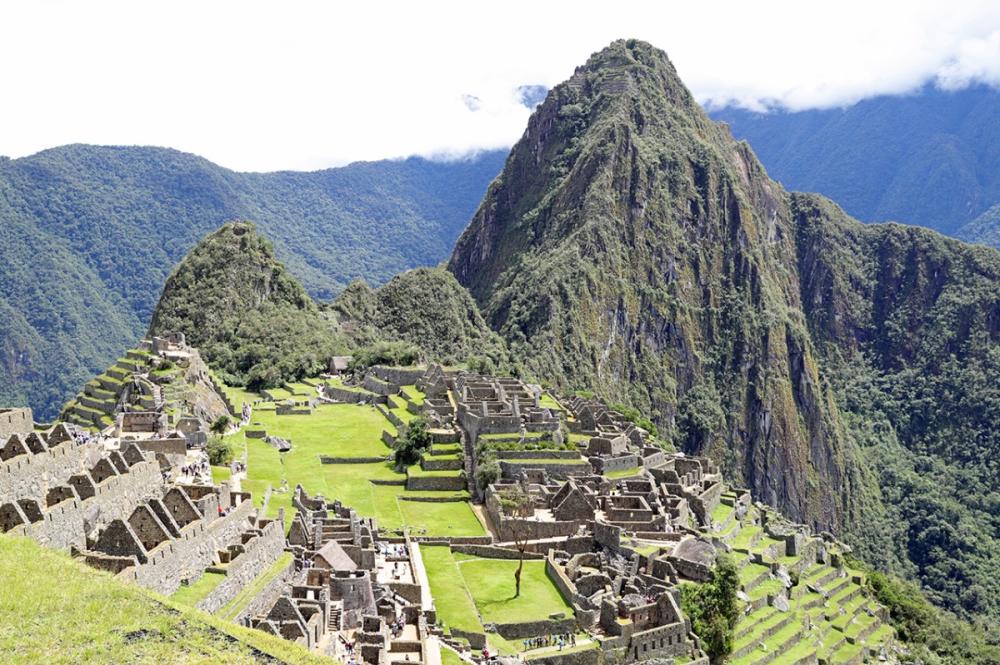
World wonder: Machu Picchu Images by Steve Hare
Often referred to as the lost city of the Incas - and designated one of the ‘New 7 Wonders of the World’ in 2007 - the 15th century citadel in the Andes towers almost 8,000 feet above sea level.
Our Lifestyle and Leisure Editor, Sharon Cain, and husband Steve, our series photographer, travelled across the world to Southern Peru to find out for themselves if Machu Picchu, which means ‘old mountain’, is all it’s cracked up to be.
Iconic Train Trip
Waiting at the platform of Ollantaytambo railway in Peru’s Sacred Valley amid the frenzied hustle and bustle, I took a deep breath to psych myself up for the phenomenon that lay ahead.
Bleary eyed (it wasn’t yet 7am) as all around me goods were being loaded onto trains, I saw strung out tour guides in charge of enormous groups trying not to lose any stragglers. Trains were being loaded and staff vigorously cleaned compartment windows as if their lives depended upon it.
Stamp of approval from ticket inspectors
Having waved off passengers in departing trains, some of whom were treated to live folk music as they set off, our time slot had arrived and our party of eight’s tickets passed muster with smartly dressed inspectors.
We journeyed through mountains and lush valleys along the Arubamba River. Flowing 450 miles from the Andes in Southern Peru to the Amazon Basin and Atlantic Ocean, it is a vital life source for the Inca civilization.
Peru Rail offers different priced compartment categories and it became apparent that our tour company had cheap-skated on budget seats. During the ninety minute trip, breakfast became more of a distant memory as my rumbling stomach bemoaned the fact that the snacks loaded aboard would not be heading our way.
Testimony To Human Ingenuity

Pinnacle of Inca ingenuity and engineering
Commissioned by enlightened Inca leader Emperor Pachacuti as a royal estate or religious site, the terraces, drainage systems, temples and fountains are an engineering and architectural feat.
The city is also testimony to meticulous, sustainable planning and built to withstand earthquakes, heavy rain and steep mountain terrain.
I tried to conceive how, over nine decades, up to 10,000 labourers of the Inca race (also known as Quechua) painstakingly lugged enormous granite stones up the mountains with wooden rollers and earthen ramps.
Only the Incas were aware of the citadel until 1911 when US explorer, Hiran Bingham, put the site on the word map after documenting and publicising the ruins which remain well preserved due to its diligent custodians.
Llama Drama
Now you see it … inquisitive llama bent on exploring Steve’s camera
A few dozen endearing llamas, a sacred, cultural, and historical symbol of Peru’s rich heritage, live here permanently. Maintaining the vegetation by grazing on the terraces, they are tagged with their name and number so their health and activities can be monitored.
Two years later, a very special memory I cherish is a cheeky llama who made a play for Steve’s camera, finding the strap very much to its taste.
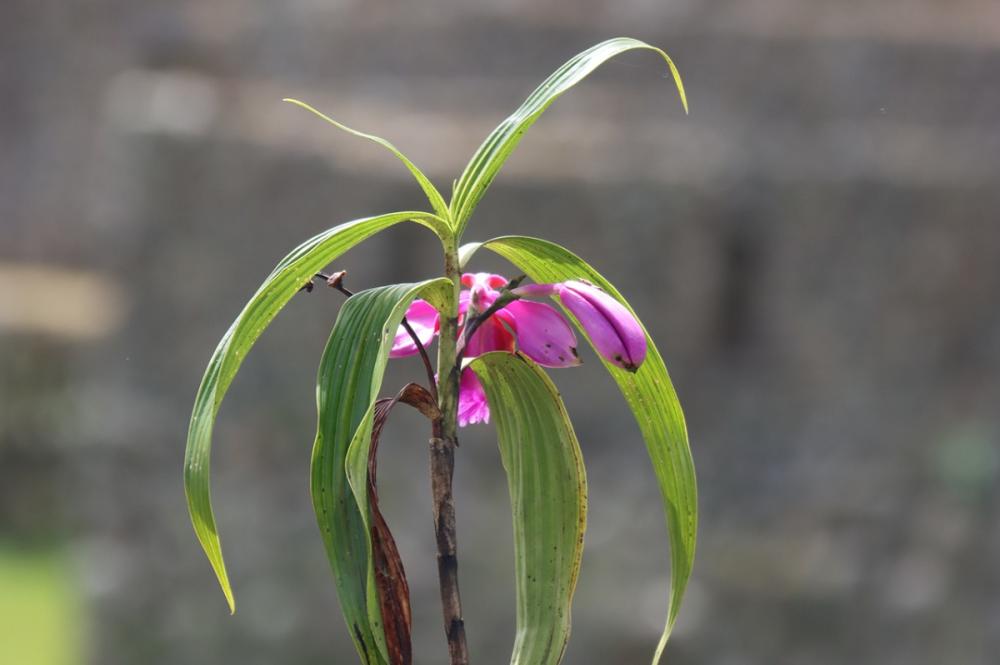
The Paradise orchid (Sobralia dichotoma) grows in between terrace cracks
The Sacred Valley

Holy corridor to Machu Picchu: Sacred Valley
Just 33 miles southeast of Machu Picchu, it was so named because ancient Incas deemed the contours and peaks of the fertile land a fertile oasis and a divine creation.
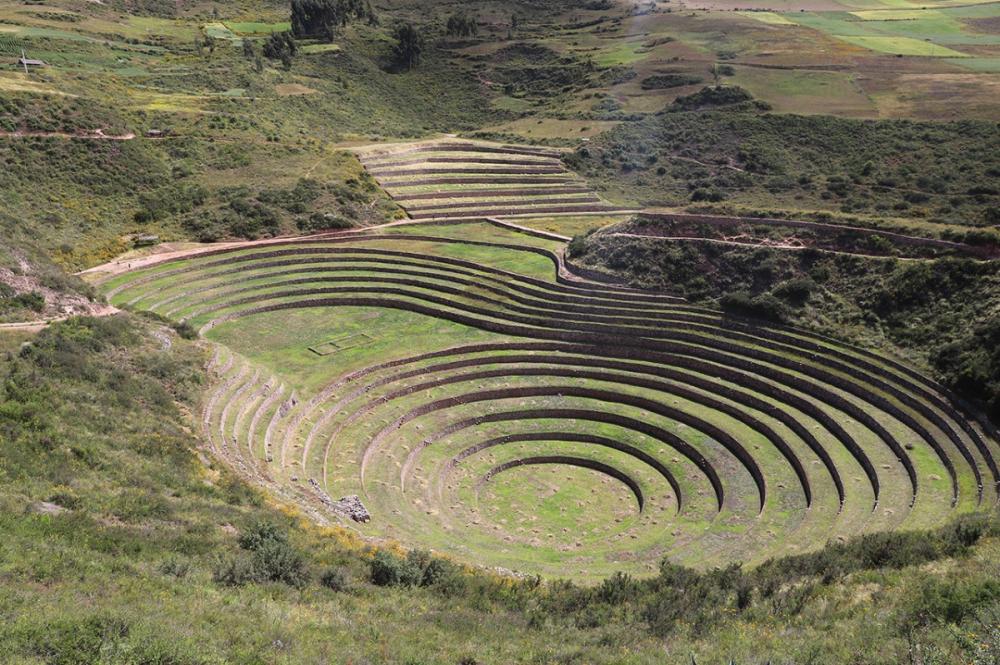
The circles denote sophisticated farming practices
The circles came about through advanced engineering and agricultural processes which created controlled microclimates to study farming practices at different altitudes. The ruins are one of four archaeological complexes used as facilities, fortresses and ceremonial centres.
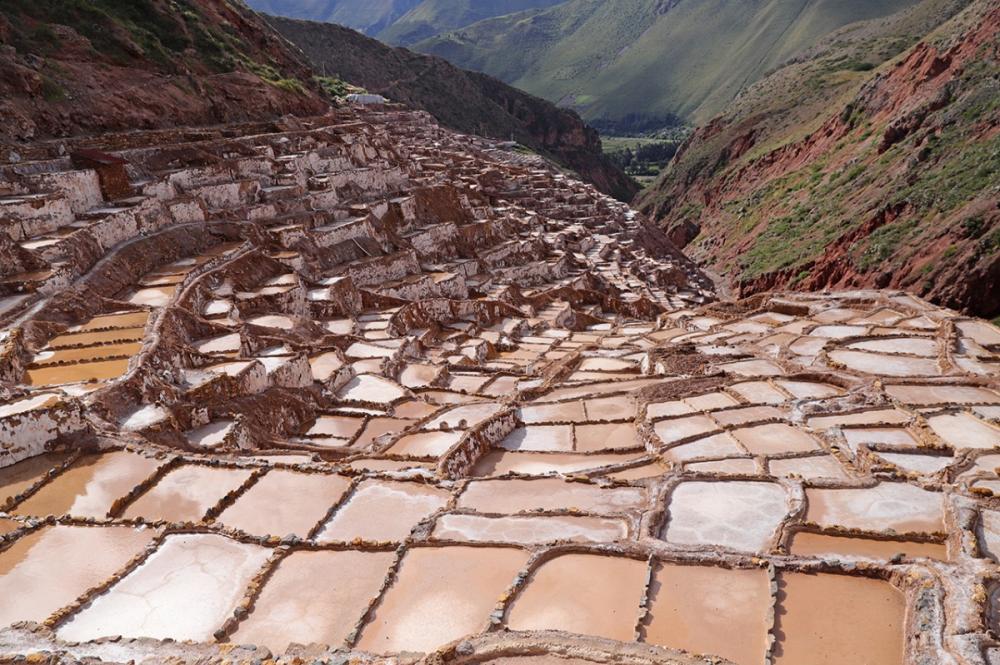
The salt extraction process, another example of the Inca’s pioneering nature, sees water channelled from a natural underground spring into shallow pools which evaporate under the sun.
Inca's patchwork quilt: salt mines
Cusco’s Cultural Delights
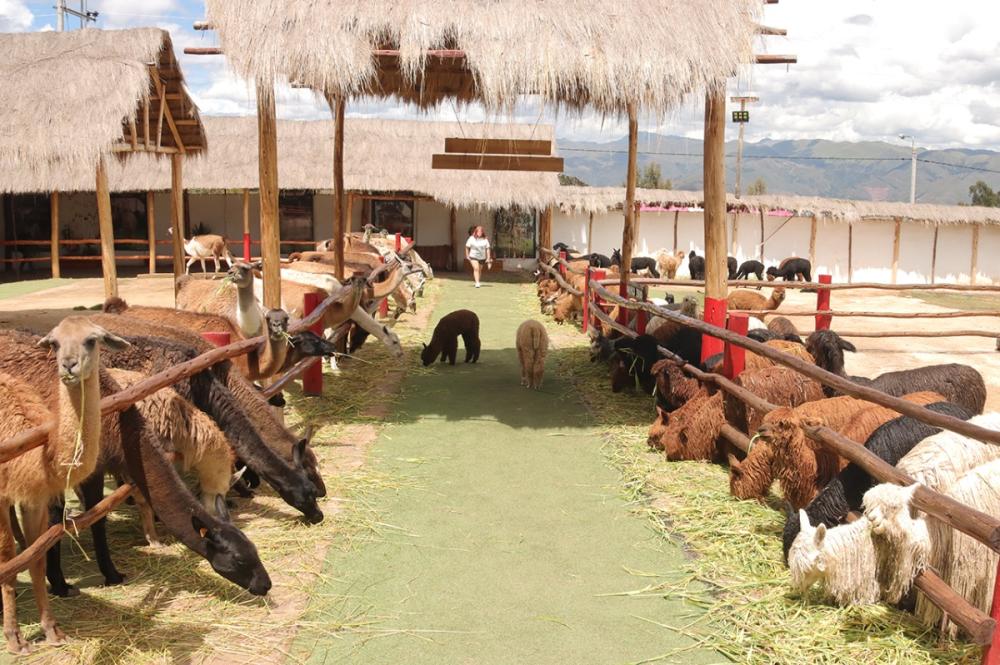
Insatiable appetite for greens: llamas at Ollama Chaco
Our first tourist destination after arriving in Cusco from Peru’s capital Lima, it required concentration to prevent my fingers being gently nipped by the llamas' enthusiasm in demolishing endless quantities of fresh grass and shrubs.
Making new friends at feeding time
Intelligent, curious and very social, they thrive in cool, dry areas, love being in packs and are very content in this environment. I’d advise booking an afternoon trip as the llamas tend to be less active in the morning chilly mountain climate.
Meticulous processes are adopted in the weaving
Maintaining traditions, the five processes undertaken are shearing, spinning, dyeing, weaving and finishing. The end products are exquisite textiles with their own unique patterns and colours.
While barely scratching the surface of the Sacred Valley in just four days, I felt privileged to have seen at first hand how - and why - the Inca's phenomenal achievements continue to withstand the test of time.
Nowhere in the world have I felt the positive forces of nature more powerful, life-giving - and exhilarating - than at Machu Picchu.
I challenge you to ascend its heady heights and not be moved by its profound spirituality.
The best time to visit Machu Picchu, the Sacred Valley and Ollama Chaco is between May to October
Sharon Cain and Steve Hare travelled to Peru as part of a paid for South American package with Imagine but would not recommend the company. Alternative providers include Trailfinders and Intrepid Travel
For information about flights from UK airports to Lima visit here
For information about flights from Lima to Cusco (1 hour 15 minutes) visit here
For information on purchasing tickets to Machu Picchu visit here
For information on exploring the Sacred Valley visit here
For information on UK Government advice on travelling to Peru visit here
Also by Sharon Cain...
Venice And Motorhoming? You've Got To Be Joking!Reflections On A Sensational African SafariThe Anastasia File: Imperialism, Evil, Fact And FictionMotorhoming Switzerland: Mingling With The Rich In St MoritzLush Islands, Medieval Walls, Cascading falls: Croatia's Sensory FeastThe shortened address for this article is: newspub.uk/01z2b