


search
date/time

Sat, 4:00PM
moderate rain
9.8°C
SSE 20mph
moderate rain
9.8°C
SSE 20mph
 | Sunrise | 6:48AM |
| Sunset | 4:48PM |  |
P.ublished 24th October 2026
arts
Opinion
An Alpine Symphony
Vasily Petrenko on the new RPO album release and its music consumption research
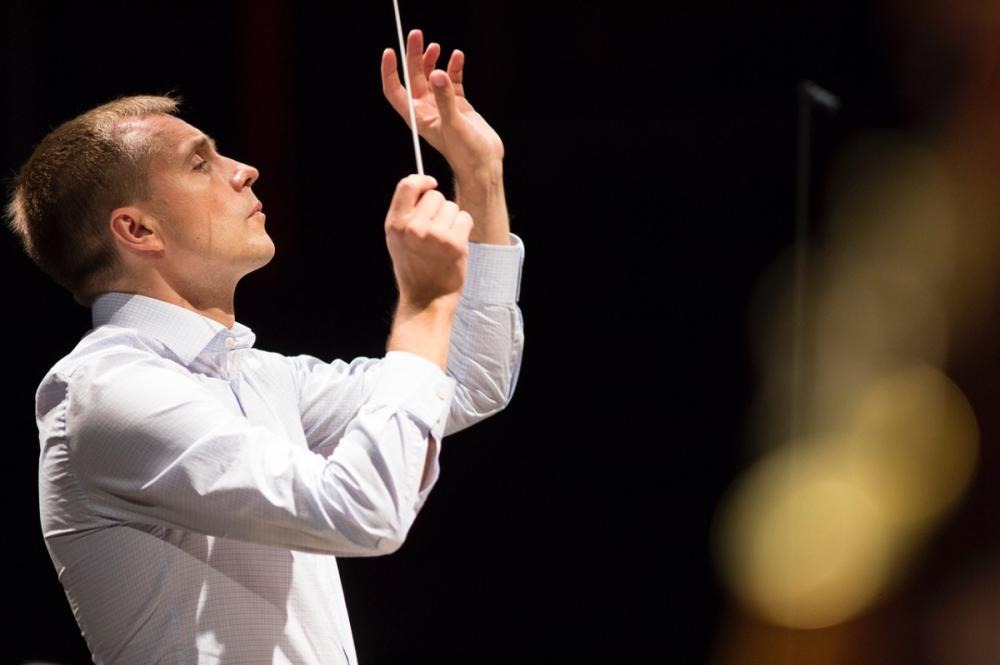
Vasily Petrenko
Photo: RPO
It's a great piece. Probably one of the largest tone poems of all the time. And it depicts a journey of Strauss to the Alpine Mountains as memories of a journey from his youth. But it's not just a journey up to the summit and back. It also can be qualified as a journey of culture – the culture of humanity just a few years before the First World War and the descent of civilization from the cultural heights previously achieved. And at the end of the piece, there's two most remarkable moments: Of course, the storm, which is in the middle of it, where everything goes to flight almost – there are even cows with cowbells flying through this storm. There’s also an attempt to revive the optimistic feeling of going up to the summit. The church bells and organ bring a religious dimension and a little bit of salvation – but, at the end of the symphony, it still has this feeling of so much bitterness going into the darkness; the darkness of the daytime, the darkness of the civilization.
The studio recordings, of course, have a massive benefit of being able to listen and improve the sound, precision, ensemble, balance and cohesion immediately and achieve quality as close to ideal as it is possible. But with live recordings, of course, you have the public. And the audience is vital and one of the most important parts of the performance. So, with live recordings the musicians are playing for the public and, of course, they play differently than when they're playing in an empty hall, which you do with the studio recordings. So live recordings have a lot of pros. There is a greater adrenaline rush, a sense of moment and an appreciation of the importance of the performance. This is more in the veins of musicians; that would be the case with studio recordings. For studio recordings, you don't have the eyes looking on you. And then, quite often, you have to repeat material several times and to keep the same level of intensity in the studio can be much more difficult.
Also, with live recordings, you have a very, very short and quick period of patching. Usually it's no more than half an hour. So, very quickly while conducting or right after performance, you have to realize very quickly the points which you need to patch and need to improve. This is very fast work and needs to be done with a high precision knowledge of what exactly was wrong and how it can be improved in the moment. For me personally, the live recording is a reflection of the moment, the night of the performance - whilst studio recordings are reflection of a far longer process of understanding a piece, the casting and performing a piece.
The resurgent interest from young people in buying physical music
The new RPO research findings were interesting, especially in relation to the music preferences of younger people. I think the key reason why CDs and vinyl are making a comeback is because people today have too much information that is instantly available. The playlists and sheer volume of recordings you can get at the touch of a button can become so overwhelmingly large that you cannot even navigate it. If you have a physical copy of an album, it stands somewhere on the shelf and then it's quite easy to find. For many people, a music collection is a reflection of personal choice and their personalised journeys of music discovery and, like books, the collection has meaning, a purpose and also nostalgia. It fosters a closer connection and sense of value with the music people like.
I also think some people are so fed up with the unwanted ads that dominate so many online experiences. Most downloading sites or engines are full of ads and, beyond this, one can question whether people are curating their own musical discovery online or whether they are finding the music the algorithm wants them to find. With a CD or vinyl, you choose to buy it, and the recording itself is just the music, free of ads and interruptions. I know quite a lot of people who are really tired from the hidden advertising messages going through them.
A few decades ago when music downloads and streaming took off, having everything digital made life easier. But now I think the pendulum is swinging the other way. There can be so much choice, and things can become so accessible that what people want can become hard to find. There’s also no ownership in it – and there’s less sense of occasion with a new release. Streaming is great for signposting, but there is a sense of occasion – even excitement - with buying a new album on release day. I think this may be something younger people may be discovering and it supports journeys of discovering and, ultimately, is helping new audiences to experience classical music in the concert hall.
The shortened address for this article is: newspub.uk/021fo