


search
date/time

Wed, 1:00AM
broken clouds
16.6°C
SE 11mph
broken clouds
16.6°C
SE 11mph
 | Sunrise | 6:02AM |
| Sunset | 5:47PM |  |
P.ublished 29th September 2026
business
Business Gives Burnham A Cautious Welcome – But Says The Budget Is The Real Test
Firms back PM's long-term vision while warning against a bigger state
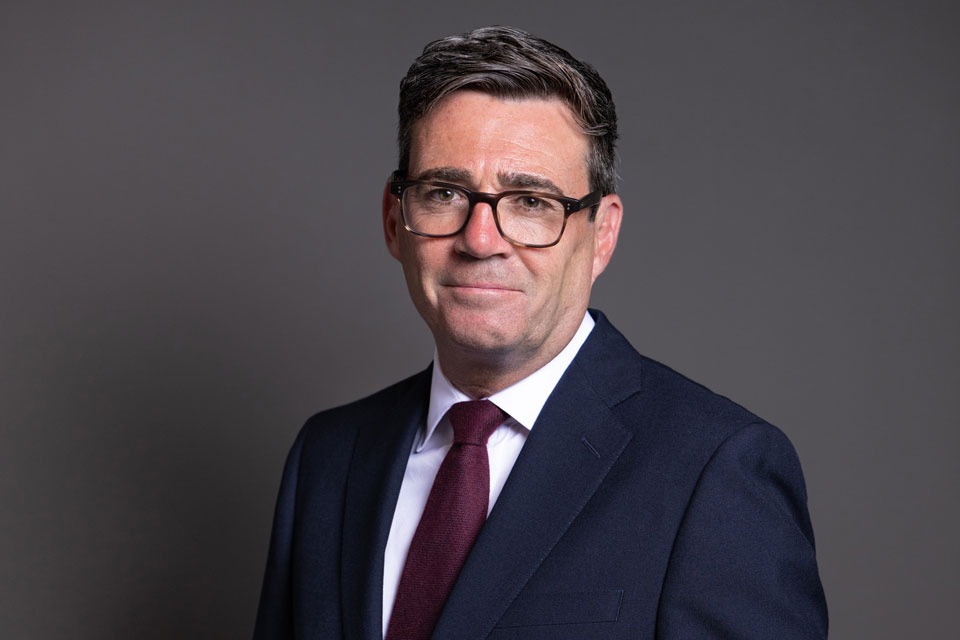
Andy Burnham
Photo: Gov.UK
The loudest note of caution came over the Prime Minister's plans for greater public control of utilities and critical infrastructure, with employers' groups and free-market economists alike warning that the state must not crowd out private investment.
Rain Newton-Smith, Chief Executive of the CBI, said the Prime Minister had "painted a vision in the boldest of primary colours" for the country's transformation, "one with a stronger role for the state, but ultimately dependent on private sector investment and delivery."
"Public investment should be designed to crowd in, rather than crowd out, private capital," she said.
She credited Mr Burnham for being "willing to confront difficult questions about the long-term sustainability of the state pension in order to tackle the challenge of social care," and said fiscal credibility mattered: "The Prime Minister's commitment to discipline should reassure markets that reform will be pursued alongside stable and sustainable public finances."
The CBI also welcomed "pragmatism on the North Sea", but said the detail of the new publicly owned Great British Grid should be developed with business against a clear test – whether it speeds up connections and unlocks, rather than displaces, private investment.
For Shevaun Haviland, Director General of the British Chambers of Commerce, it was "a powerful speech in which the Prime Minister took a long-term view and signalled a willingness to make tough choices."
"But next month's Budget will now be the critical test," she warned. "It must cut those costs, unlock growth and let the entire country benefit."
The BCC was blunter than most on public ownership. "The business community will be concerned about the potential for greater public control," Ms Haviland said. "State control should not be the default answer to poor performance in utilities and critical infrastructure."
She welcomed the Prime Minister's openness to reforming the triple lock and his "pragmatic tone" on rebuilding relations with the EU, including his promise that a UK-EU summit would take place by the end of the year. However, while households and the smallest firms will benefit from the scrapping of VAT on electricity this week, she noted that most businesses "will be left waiting for benefits of market reform before their bills are cut."
Grid connections
Grid capacity emerged as a recurring theme. Simon Green, Chief Executive of Humber Freeport, welcomed the Prime Minister's "acknowledgement of the vital importance of power provision in enabling major developments," and urged ministers to work closely with investors and the Great British Grid "to accelerate the provision of grid connections that power investment, jobs and growth."
'More control to the state'
The sharpest criticism came from the Institute of Economic Affairs. Senior Economist Dr Valentin Boboc said Mr Burnham had promised to give people more control over the economy, "but too often his answer was simply to give more control to the state – shifting costs from bills onto taxpayers rather than making them disappear."
He singled out the proposed National Care Service as "the biggest problem", arguing that the government was taking on a new open-ended spending commitment while maintaining the triple lock until 2030. A revived Help to Buy, he added, risked "subsidising demand where housing supply remains constrained, potentially pushing prices higher."
On Europe, Dr Boboc said the Prime Minister had "opened a much bigger debate about Britain's long-term relationship with the EU without saying which model he favours."
Manchester model
If there was one idea that united the business voices, it was the approach Mr Burnham honed as Mayor of Greater Manchester. "The model of growth developed in Manchester – bringing government and business together around a shared plan for investment and delivery – is one businesses across the country can get behind," said Ms Newton-Smith.
The anticipation now shifts to the Budget on 28 October, with small firms already noting the lack of detail in Chancellor John Healey's conference speech. The CBI wants that Budget to deliver "the first downpayment" on the partnership the Prime Minister described.
Business, in short, liked what it heard. It simply wants to see the receipt.
The shortened address for this article is: newspub.uk/0213z