


search
date/time

Thu, 1:00AM
clear sky
18.0°C
SE 6mph
clear sky
18.0°C
SE 6mph
 | Sunrise | 3:44AM |
| Sunset | 8:34PM |  |
P.ublished 26th May 2026
sports
Cecil Slingsby: The Father Of Norwegian Mountaineering, Friend Of Edvard Grieg, And A Proud Yorkshireman
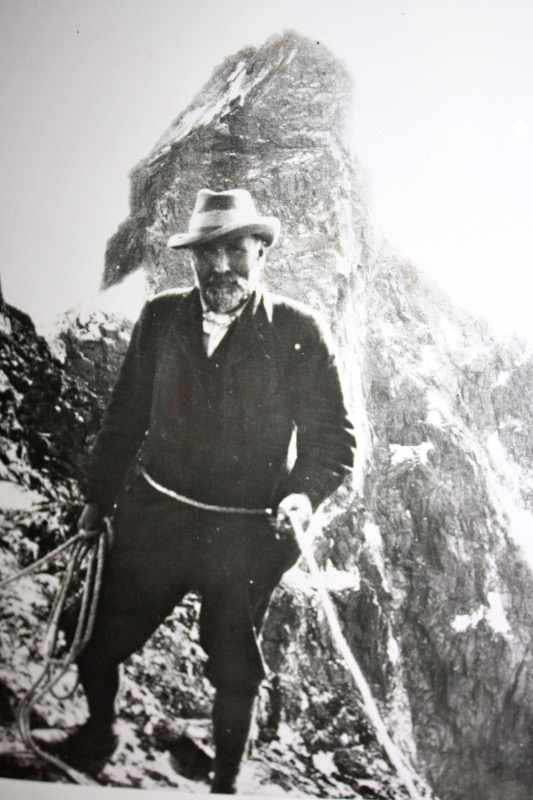
Cecil Slingsby
He climbed extensively in Britain, particularly in the Lake District where he made a number of first ascents, and in Scotland, especially on Skye, and he spent several seasons climbing in the Alps.
His most outstanding achievements, however, came on expeditions to the Jotenheimen Mountains in Norway throughout the 30 years following his first visit in 1872. He can have had no idea that he would become much-loved in the country and given the honorary title of ‘Father of Norwegian Mountaineering.’
Cecil’s Connection with Norway
Cecil’s interest in Norway started when he was a child after reading a children’s novel called Feats on the Fjord by Harriet Martineau. His interest in climbing was triggered when his father bought him a book called Scrambles Amongst The Alps by the famous mountaineer Edward Whymper, who was the first man to climb the Matterhorn. These two separate threads, added to the fact that Norway’s mountains were virtually unexplored, made the idea of visiting the country irresistible to Cecil. His first visit to Norway was in 1872, although this was more in the nature of a sightseeing holiday than a climbing expedition. His real conquest of Norwegian mountains was to start in earnest two years later.
Mountaineering in Norway
His second visit to Norway was in 1874 when the sport of mountaineering barely existed there.
This visit included the first ascent of a 2,300 metre mountain called Memuruntind, and over the next fifteen years Cecil was credited with thirteen first ascents of Norwegian mountains.
He also became renowned for his skills in negotiating ice and snow, and he pioneered several new routes through the mountains and across the glaciers in this area.
The following year, 1875, saw him make another visit, this time accompanied by his sister Edith. The outstanding event of this visit was when he and Edith climbed Glittertind, the second highest mountain in Scandinavia, and in doing so Edith became the first women to achieve this feat.
Most Famous Climb (and the reason for the celebration this year)
The most famous of Cecil’s climbs came on 21st July 1876, when he climbed a mountain called Skagastolstind, or Storen for short. At the time it was believed to be the highest mountain in Norway and was thought to be unclimbable. Cecil described it as the finest mountain north of the Alps.
He set out with two Norwegian colleagues, Emanuel Mohn and Kurt Lykken but when they were within about 500 feet of the summit, his companions decided not to go any further, so Cecil, with minimal equipment, completed the climb on his own.
This was a remarkable feat in its own right, but added to the five other ascents over five days, albeit of less challenging peaks, it becomes even more extraordinary. He was clearly an exceptionally fit and tough individual.
In spite of becoming famous through his climb of Stagastölstind, in later years he modified his views, saying, “Solitary climbing is a form of mountaineering which can hardly be too severely condemned” and "Carried away by the enthusiasm of youth, I did many things in the seventies which I would not do now."
Slingsby was unusual for his time in suggesting that mountaineering was a suitable pursuit for women. His sister Edith, his wife, Alizon, and his youngest daughter, Eleanor (Len), were also involved. Len went on to found the Pinnacle Club in 1921, a club for mountaineering women, and this is still a thriving organisation over a hundred years later.
Respected in Norway
In 1922 a memorial was built in Bergen to remember Norwegian seamen lost during the First World War and it is a measure of the respect in which Cecil was held that he was invited to unveil the memorial. Press reports say that he gave a speech in Norwegian to a crowd estimated at 5,000 people. On the same visit he was invited to an audience with King Haakon.
Cecil was also a friend of the Norwegian composer Edvard Grieg and his title as the “Father of Norwegian Mountaineering” is honoured in the Norwegian Mountain Centre in Lom (which also houses the Slingsby café), and in the Norwegian Museum of Travel and Tourism in Balestrand on the Sognefjord, amongst other places.
Celebrations
The anniversary of his historic climb will be marked in Norway and also in his small home village of Carleton in Craven where Cecil lived a very full life. He was a successful businessman, a happily married and devoted family man, a sportsman and, of course, an outstanding mountaineer.
Cecil died in a nursing home in Hurstpierpoint in Sussex in 1929 aged 80, and he is buried in St Mary’s Churchyard in Carleton.
In an obituary which appeared in the journal of The Rucksack Club he was described as “one of the greatest heroes in the annals of climbing”
In his obituary in The Times, his son in law said “But it is as one of the greatest of mountaineers that he will be longest remembered. For a mountaineer and explorer he had the ideal equipment, a magnificent physique, exceptional hardihood, grace and agility, an unerring judgment, and an imperturbable coolness and courage. Above all he had the gift of infecting others with his own quiet confidence and however daring the exploit in which he took part, it seemed always assured of a successful and safe issue”
Although, since his death, he has been largely forgotten outside climbing circles, he deserves to be remembered and celebrated as a pioneer and as an inspiration to others, and as Carleton’s most famous resident.
And away from home, the peaks of Slingsbytind and the Slingsbybreen glacier will stand for a very long time as an indication of how much he was loved and respected by his mountaineering friends in Norway.
This article was written by Anne Nolan, with thanks to the late John Snoad, who had generously shared his meticulous research.