


search
date/time

Sat, 10:00AM
clear sky
11.5°C
WNW 6mph
clear sky
11.5°C
WNW 6mph
 | Sunrise | 6:09AM |
| Sunset | 5:37PM |  |
Andrew Palmer
Group Editor
P.ublished 3rd October 2026
arts
Review
Classical Music: Ralph Vaughan Williams From Ursula, With Love
Treasures from a widow's shelf
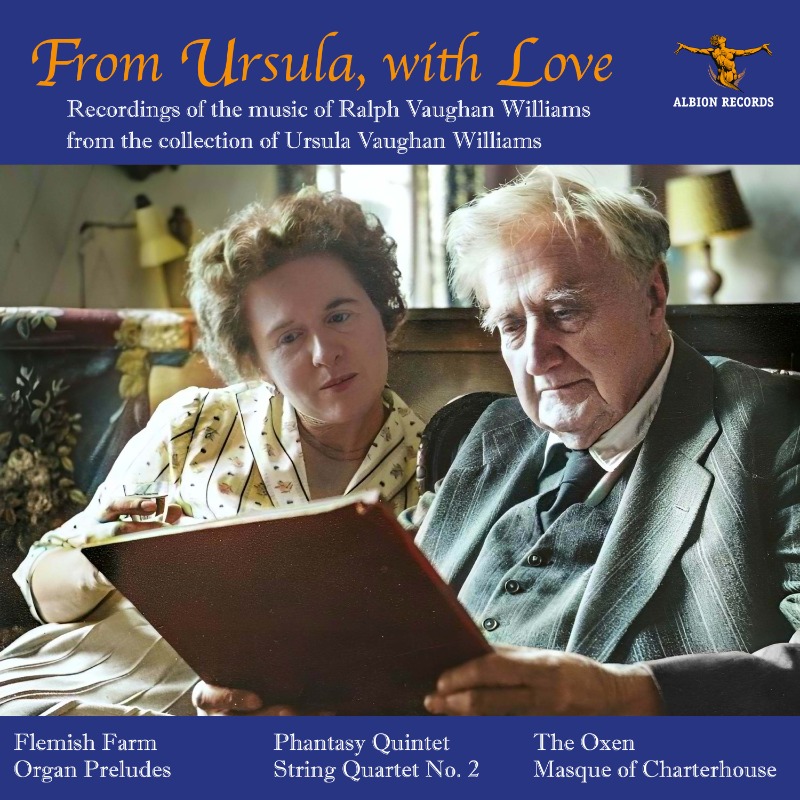
Recordings of the music of Ralph Vaughan Williams from the collection of Ursula Vaughan Williams.
Suite: The Story of a Flemish Farm - three extracts; Phantasy Quintet; Hodie (This Day) – A Christmas Cantata – extract The Oxen; Three Organ Preludes Founded on Welsh Hymn-Tunes Bryn Calfaria, Rhosymedre, Hyfrydol; String Quartet No 2 in A minor. For Jean on her Birthday; Solemn Music for the Masque of Charterhouse (Final Scene) Solemn Music & Finale
BBC Scottish Orchestra, Graham Treacher, conductor; Aeolian Quartet : Sydney Humphreys, violin; Raymond Keenlyside, violin, Margaret Major, viola, Derek Simpson, cello, Kenneth Essex, second viola; John Carol Case, baritone; Philomusica of London. Donald Cashmore, conductor; George Thalben-Ball, organ; Chorus and Orchestra of Charterhouse School, William Llewellyn, conductor
ALBCD072 (Albion Records, CD)
https://www.rvwsociety.com/albion-records/
The first thing to keep in mind, though, is that these recordings date from between 1961 and 1972. This is not a modern studio production polished to a digital sheen, and listeners should not expect one. It is a set of snapshots of how Vaughan Williams was played in the decade or so after his death, made by musicians many of whom had known and worked alongside him. Judged on those terms, it is a remarkable survival.
The film music is a reminder of how productive the war years were for the composer. Buoyed by the reception of 49th Parallel, he went on to write for Coastal Command and then, in 1942, for this Two Cities picture. Drawn from real events, it follows the last of Belgium's airmen as they regroup on farmland in Flanders, and Vaughan Williams responds with music of warmth and quiet heroism.
The Aeolian String Quartet, founded in 1944 and a familiar name on disc and on air until it disbanded in 1981, is joined by the violist Kenneth Essex for the Phantasy Quintet.
The work begins with the solo viola alone, and the sound is warm and generous. Anyone who knows the Tallis Fantasia, finished only a couple of years earlier, will hear the family likeness at once. There is a rhapsodic quality here that belongs to the same world as the composer's pastoral landscapes. The playing is fine throughout, the textures communicated with great clarity, and the closing Burlesca, rooted in English folk song, gives the cello a delightfully offbeat tune that is full of charm.
The Aeolians also give us the String Quartet No 2 in A minor, written "for Jean on her birthday", and they capture the emotional heart of the second movement Romanza beautifully.
John Carol Case, whose account of this music never made it onto a commercial disc, sings The Oxen from Hodie with baritone warmth and diction so clear that one barely needs the text.
Then come the Three Preludes founded on Welsh Hymn Tunes. Many organists will know the set through the second, Rhosymedre, which remains a staple of weddings and voluntaries. I was introduced to the first, Bryn Calfaria, by Dr Graham Elliott when he was Master of the Music at Chelmsford Cathedral, and I have enjoyed playing all three ever since. So I came to these performances by Sir George Thalben-Ball with high hopes. The organ sounds splendid and is almost certainly the Temple Church instrument, though the booklet admits its provenance cannot be confirmed. Sadly, the readings disappoint.
Rhosymedre is taken at a rather laboured pace, the pedal is too heavy, and the sound here is the least clear on the disc. Thankfully, organ interpretation has moved on since GTB's day, and this is a disappointing showing from a player of his undoubted stature.
The disc closes with the Masque of Charterhouse, recorded at the school itself in 1972. The two pieces show him turning his pen, with evident ease, to music written simply to give pleasure.
The organ preludes aside, this is a treasure trove for anyone who loves Vaughan Williams. The Albion team has done a first-rate job of restoring the discs Ursula kept, and the accompanying booklet is excellent. Accept the sound for what it is, a window onto the 1960s and 1970s, and there is much here to reward the patient listener, even if not every track lives up to the promise of the opening. It is a gift to be treasured, but one that shows its age.
Also by Andrew Palmer...
Classical Music: Requiem Da Camera, For St Cecilia & In Terra Pax Classical Music: Franck Quintet Enescu OctetClassical Music: Granville Bantock Orchestral WorksIlkley Literature Festival Opens With A Strong Yorkshire AccentLandsec Swoops For Metrocentre In £516m DealThe shortened address for this article is: newspub.uk/0214k