


search
date/time

Thu, 1:00AM
broken clouds
8.3°C
WSW 8mph
broken clouds
8.3°C
WSW 8mph
 | Sunrise | 6:42AM |
| Sunset | 4:54PM |  |
P.ublished 30th September 2026
frontpage
Collecting repeat prescriptions costs the economy £11.5bn a year – more than the NHS spends on the medicines
Digital ordering booms, but most patients still queue at the counter
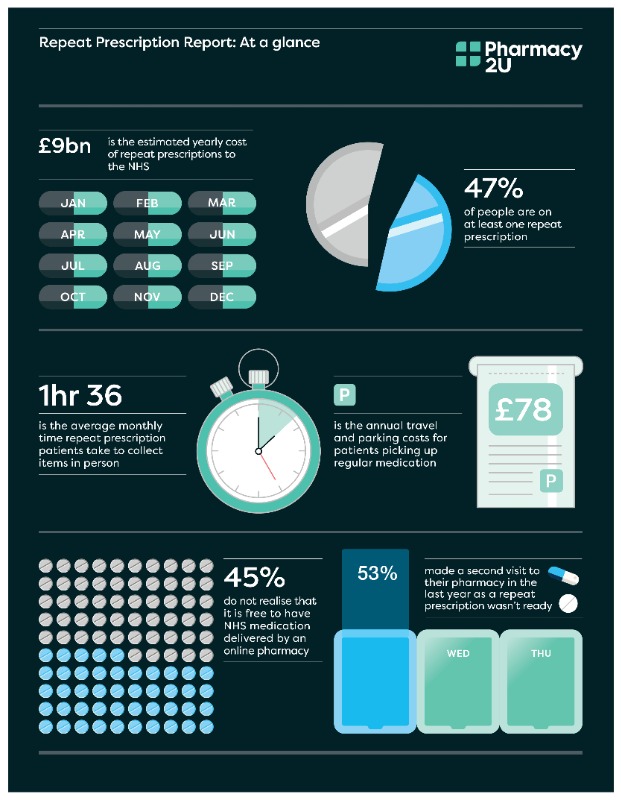
The Repeat Prescription Report, written by two primary care experts at Imperial College London and published by online pharmacy Pharmacy2U, finds that almost half the population (47%) is now on at least one repeat prescription. Diabetes treatment is the single biggest cost to the health service at £1.5 billion a year, roughly double the figure when the last report appeared in 2017.
The authors, Professor of Practice in Primary Care Waseem Jerjes and Primary Care Research Manager Dr Austen El-Osta, argue that while the ordering of medicines has gone digital, the business of getting them into patients' hands has lagged well behind.
Seven in ten adults managing repeat prescriptions now order them digitally, with the NHS App the most popular route. A record 7.6 million repeat prescriptions were requested through the app in July alone. Yet two in three (66%) still collect their medicines in person from a community pharmacy.
That habit comes at a price. Patients spend an average of 1 hour 36 minutes a month collecting prescriptions – the equivalent of two-and-a-half working days a year – plus around £78 a year on travel and parking.
Nor is the trip always a successful one. Over the past year, more than half (53%) of those collecting prescriptions had to make a second visit because their medication was not ready, a quarter (24%) gave up because of the length of the queue, and one in three (34%) reported missing out on a prescription because of a mix-up between the pharmacy and their GP. One in six had to pay for an emergency supply, and the same proportion said they had suffered health problems as a result of delays.
"Much has changed since the last Repeat Prescription Report in 2017, but the UK's prescribing system is still in transition," said Professor Jerjes. "The age of GPs writing out paper prescriptions is over, with 97% of prescription orders sent directly to a patient's chosen pharmacy using the Electronic Prescription Service. However, the process of getting medicines into people's hands has not shifted as quickly."
An ageing population
The pressures are set to grow. Over-55s already account for three in every four items prescribed on the NHS, and patients on repeat medication typically spend seven years on treatment for their longest-standing condition. With the number of people aged 85 and over expected to double by 2049, the report calls for far closer coordination between GPs, hospitals, carers and pharmacies.
The burden falls hardest on those already coping with health conditions. Almost half (47%) of people managing ADHD or related conditions said problems collecting medication had caused them stress in the past year, while 57% of arthritis patients had needed to make repeated trips. A quarter (26%) of those managing their mental health said they struggled to remember to order and collect.
For Dr El-Osta, the regular contact of repeat prescribing is an opportunity that is too often missed. "It is often the most regular contact they have with the health system," he said. "However, healthcare needs aren't a one-size-fits-all, and that contact must be tailored to the individual."
He sees distinct roles for different kinds of pharmacy: online services for planned supply, reminders and delivery; community pharmacies for urgent medicines, physical assessment and vaccination.
Awareness gap
Many patients, the report suggests, simply do not know what is available. A quarter of adults (25%) are unaware that online pharmacies can fulfil NHS prescriptions, and 45% wrongly believe home delivery costs extra. More than half (57%) said a full digital record of their prescription history would make them feel more in control of their health.
The report sets out five recommendations: tracking prescriptions from request to delivery; raising awareness of nominated pharmacies and making it easier to switch; designing reminder systems for those most likely to run out of medication; using repeat prescribing for prevention, such as blood pressure checks and vaccination reminders; and a "bricks-and-clicks" network allowing online and community pharmacies to refer patients to one another.
The findings come as the NHS pursues its 10-year plan, including a Single Patient Record – currently before Parliament in the Health Bill – intended to bring health and social care data together in the NHS App by 2028.
Phil Day, Superintendent Pharmacist at Pharmacy2U, said the figures showed "a growing cost not only to patients, but to the NHS itself," adding that greater awareness of the options could "protect people's precious time."
The prescription, it seems, is written. The trouble is collecting it.
The shortened address for this article is: newspub.uk/02140