


search
date/time

Sat, 1:00PM
overcast clouds
12.3°C
W 15mph
overcast clouds
12.3°C
W 15mph
 | Sunrise | 4:56AM |
| Sunset | 7:10PM |  |

Jeremy Williams-Chalmers
Arts Correspondent
@jeremydwilliams
P.ublished 18th April 2026
arts
Fast Money Music
An evocative mix of bittersweet pop, jagged post-punk, and breezy jangle-pop, it’s a record steeped in tough nostalgia – shaped by the lo-fi charm of The Cleaners from Venus, the restless drive of Guided by Voices, and the wiry funk of ESG. Produced by Grammy-nominated Mikko Gordon (IDLES, The Smile), its 10 tracks feature a stellar list of guest musicians include The 1975’s John Waugh and George Daniel, Klaxons’ Jamie Reynolds and Steffan Halperin, Daniel Vildòsola (CMAT, Haelos), plus Oliver Marson and Zoë Bleu. We caught up with Nick to learn a little more.
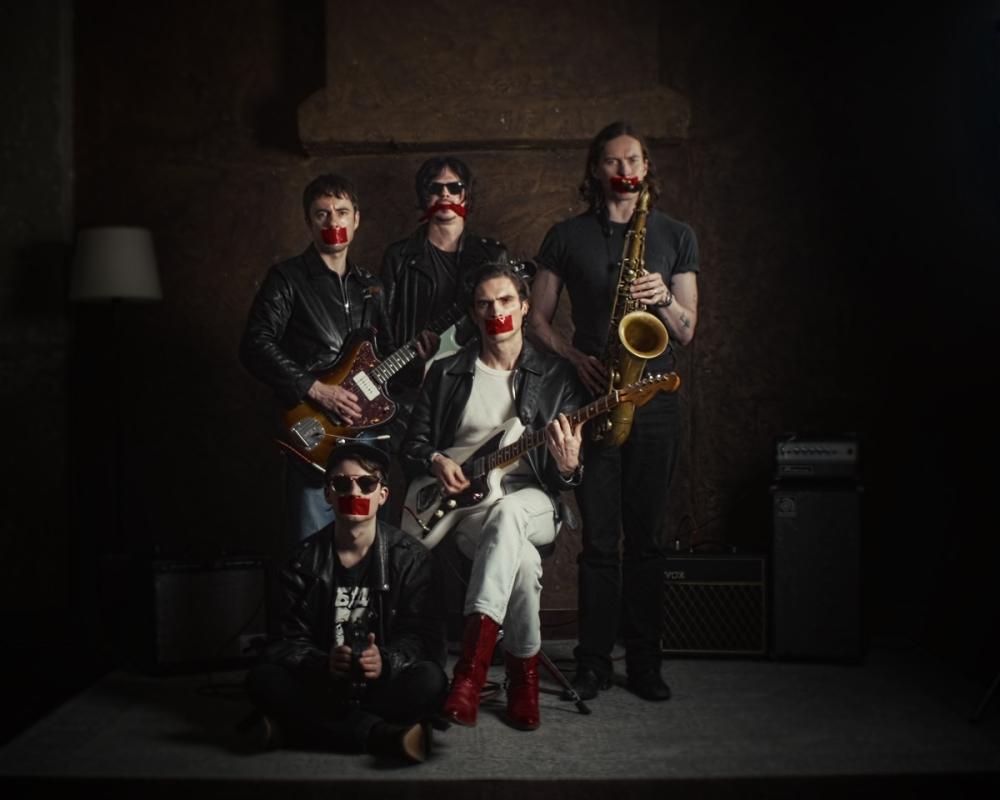
They can expect Fast Money Music! It’s a window into my world, I suppose. It’s very human, which is something you can be proud of these days. It’s full of anecdotes, metaphors, fantasies, and harsh realities. Musings on the absurdities of life.
You describe the album as “part novel, part autobiography". At what point did you realise this wasn’t just a collection of songs but a larger narrative?
I had a catalogue of demos that were burning a hole in my hard drive, so to speak. I knew that if I didn’t release them, they would haunt me forever. That’s how I started Fast Money Music. I put a few on an EP and called it Strange Moments and released it in 2023. I did the same thing in 2024 with another five songs on an EP called Rouge. At the end of 2024, I had another 10 songs that felt different. They felt less like a capsule and more of a statement. It felt like an encompassing narrative and reflective of my identity, who I am now, in this present moment.
The phrase “life on life’s terms” stands out—what moments on the record capture that idea most vividly?
‘Life on life’s terms’ is an adage that helps me attain peace. It’s a daily reminder that the world will keep spinning no matter what and I should stop trying to control that. Round and Round captures that sentiment in a lot of ways. Getting caught in the cycles of ‘what if’ and ‘could have been’. A lot of this record is me slowly trying to release my death grip on life and let go.
You’ve said this is your “most authentically me” work—what held you back from that level of honesty before?
Releasing honest art is terrifying. Fear of judgement, imposter syndrome, self-doubt, self-criticism — it’s always there. For a long time it was easier to put on a front. After a while it gets tiring, though. I feel more confident now in being myself than being someone else.
The album was written across a decade—how did your perspective on older songs change when revisiting them for this release?
I wrote an early demo of Ashes in 2016. It felt like a song that was following me around for years, always living rent-free in my mind, but it never felt ready to release. I released an early version of it on the Strange Moments EP but something was still missing. For the debut album, I re-recorded it and added a vocal feature from my friend and collaborator Zoë Bleu. It felt like the song opened up again, even though the intention was still very similar to its original. Sometimes it takes a few years to truly listen to something with fresh ears again.
There’s a strong sense of timing and missed timing throughout—was that a conscious theme, or something you recognised in hindsight?
Timing is everything, as they say. You can try and be strategic with it, but at the end of the day, life is complicated. You can’t change the past or predict the future. It’s easy to get lost in fantasy and hard to stay rooted in the present. That’s what “tough nostalgia” is in a lot of ways, the theme that stuck with Mikko Gordon and me when we sat down and listened to the album demos.
The record pulls from art pop, post-punk, and new wave but avoids feeling derivative. How did you strike that balance?
I tried not to think about it too much. I can’t escape my influences, but I didn’t feel like I had to try to either. I didn’t consciously try and make it sound like anything in particular; I just allowed these songs to breathe. I knew something was working when I felt excited and inspired and didn’t try and force things either.
You reference lo-fi charm and jagged textures alongside breezy jangle—how intentional was that contrast in shaping the album’s emotional tone?
I wanted the album to sound organic. I prefer imperfections over something too polished. I like angular guitars, and I also like a soft edge. I like arpeggiated synthesisers with a human feel. I wanted some contrast and duality, finding the balance between opposing ideas. In the end, we took all the songs into Hackney Road Studios and recorded them with just bass and drums to Steffan Halperin’s internal metronome, so no grids or clicks.
Were there specific records or artists you kept returning to while making this album, or was it more instinctive?
I was listening to a lot of Cleaners from Venus and Guided By Voices when I was making the album. Both Martin Newell and Robert Pollard have an interesting approach to DIY recording that feels raw and sounds interesting. It wasn’t a guide but more of an ethos I tried to keep in mind while in the studio.
This is a highly collaborative record—how did working with musicians from different scenes shape the final sound?
It was an amazing experience. All of the collaborators already knew me and understood the sound I was going for. They were able to bring something unique and adaptable to the songs, which was incredible.
What did each collaborator bring that surprised you or pushed the songs somewhere unexpected?
I was constantly surprised, in a good way. Again, me trying not to exert control was a big part of this record, in both a spiritual and physical sense. I tried to not have too much expectation and let the songs develop on their own, which is a rewarding way to work.
With a producer like Mikko Gordon involved, how did you maintain your personal vision while opening the door to outside influence?
Mikko and I were aligned from the beginning which was great. We had already worked together on the Strange Moments EP and he produced Polar Bear, a cover of Grauzone’s Eisbär and the lead single off the Rouge EP. When I asked him to co-produce the LP with me, we sat down and listened to all the demos together at my studio. He asked me what inspired me, and how I could describe it in words or turns of phrase. We developed “human machine”, “future past”, “rhythmic minimal”, and “tough nostalgia”, with the latter being the core theme.
The album explores longing, rejection, and identity—was there a particular song that was hardest to write emotionally?
Less Real is probably the most solemn song. It’s about wrestling with yourself on the reality of a situation, and figuring out what’s right versus what’s easy. The song that deals with rejection is Nevermind, but Oliver Marson and I had a fun time taking something so universal and amplifying it into a bit of obscurity and irreverence.
Your writing feels very visual—“images and vignettes”—do you see yourself as a storyteller first, or a songwriter?
I don’t think the two have to be mutually exclusive. There has to be a story behind a song, even if it’s entirely instrumental. Life presents itself in images and vignettes, especially in retrospect, and if you start to write about that it becomes a story. On a visual level, the album’s artworks were fun to design and were meant to complement the music. My partner Natasha Somerville and I found an old Polish divination card deck and used it as inspiration to adapt song themes into each song card, and my friend Louis Gilbert animated them all.
There Are No Words feels more confrontational than the album’s nostalgic core—was it important to disrupt that tone with something sharper?
I thought so. There’s an assertiveness to that song that felt at ease amongst the introspection and contemplation. It felt like it broadened the spectrum of the album, which made it a welcome addition to the ten songs.
The phrase “There Are No Words” originally came from a moment of joy—what drew you to reframe it into something more conflicted?
It’s a telling phrase. Something that could be an expression of awe or the dissolution of connection. I suppose it’s the duality of life that I find interesting.