


search
date/time

Tue, 1:00PM
light rain
14.1°C
NNW 6mph
light rain
14.1°C
NNW 6mph
 | Sunrise | 6:14AM |
| Sunset | 5:30PM |  |
P.ublished 26th August 2026
nature
Good News For Ribble Salmon As Surveys Reveal Promising Response
Record catches of young salmon suggest river restoration work is paying off
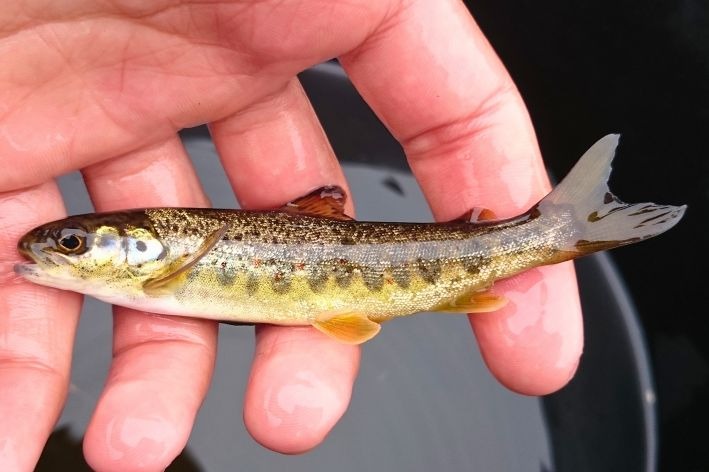
Atlantic salmon fry
Photo: Ribble Rivers Trust
Every year, Ribble Rivers Trust surveys more than 300 sites across the Ribble catchment, including the Rivers Ribble, Hodder, Calder, Darwen and Douglas, along with their tributaries. These surveys help build a picture of river health and track the fortunes of fish populations across the region.
The findings so far point to a significant improvement following several years of disappointing returns.
At one survey site, Trust staff recorded more than 100 juvenile Atlantic salmon in just a few minutes. Another site produced its first salmon in more than a decade, raising hopes that the species is beginning to recover in parts of the catchment.
Adam Wheeler, Fisheries Officer at Ribble Rivers Trust, said: "This year’s surveys give us real hope for the future. It’s a cracking bit of news and a reminder that, when rivers are given the help they need to recover, fish quickly respond”
Atlantic salmon were once abundant throughout the Ribble and its tributaries, but populations have declined dramatically in recent decades. Water pollution, barriers to fish migration, climate change, habitat loss and man-made changes to our rivers have all contributed to the species' decline.
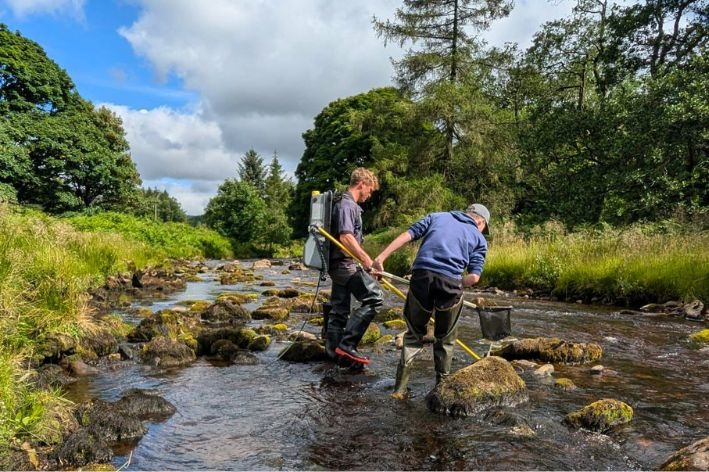
Electrofishing on the River Dunsop
Photo: Ribble Rivers Trust
Jack Spees, CEO at Ribble Rivers Trust added: "For 25 years, Ribble Rivers Trust has worked to improve our rivers for fish and other freshwater life. While there is still a huge amount of work to do, these early results suggest that targeted, science-led river restoration is paying off”
Recent projects have included large-scale habitat restoration work at Langden Brook, where new spawning gravels have been introduced to improve conditions for salmon and trout. Like many of the Trust's projects, this work was designed to restore the natural processes that fish depend on throughout their life cycle.
The positive results are especially significant because Atlantic salmon are often considered an indicator species. Healthy salmon populations generally rely on clean water, connected rivers, and high-quality habitats. When salmon thrive, many other species benefit too.
Charlotte Ireland Pope, Fundraising and Publicity Officer at Ribble Rivers Trust, said: "Projects like the gravel restoration work at Langden Brook show that practical, on-the-ground conservation can achieve real results. When combined with our education work in schools and our engagement with communities across the catchment, we're helping to create rivers that are healthy enough to support abundant wildlife while inspiring people to care about these special places as much as we do."
Survey work will continue until late September, before adult salmon begin their famous autumn migration upstream to their spawning grounds. There, they will lay the foundations for the next generation of Ribble salmon.
The full survey results will be analysed over the coming months and published early next year.
But if the encouraging trends seen so far continue, 2026 could prove to be a landmark year for Atlantic salmon in the Ribble catchment.
The shortened address for this article is: newspub.uk/020qc