


search
date/time

Fri, 10:00AM
overcast clouds
10.9°C
S 15mph
overcast clouds
10.9°C
S 15mph
 | Sunrise | 4:59AM |
| Sunset | 7:08PM |  |

Ruby Boyd
Politics Correspondent
P.ublished 17th January 2026
frontpage
Opinion
Greenland – Exsistit Et Ergo Meum Est
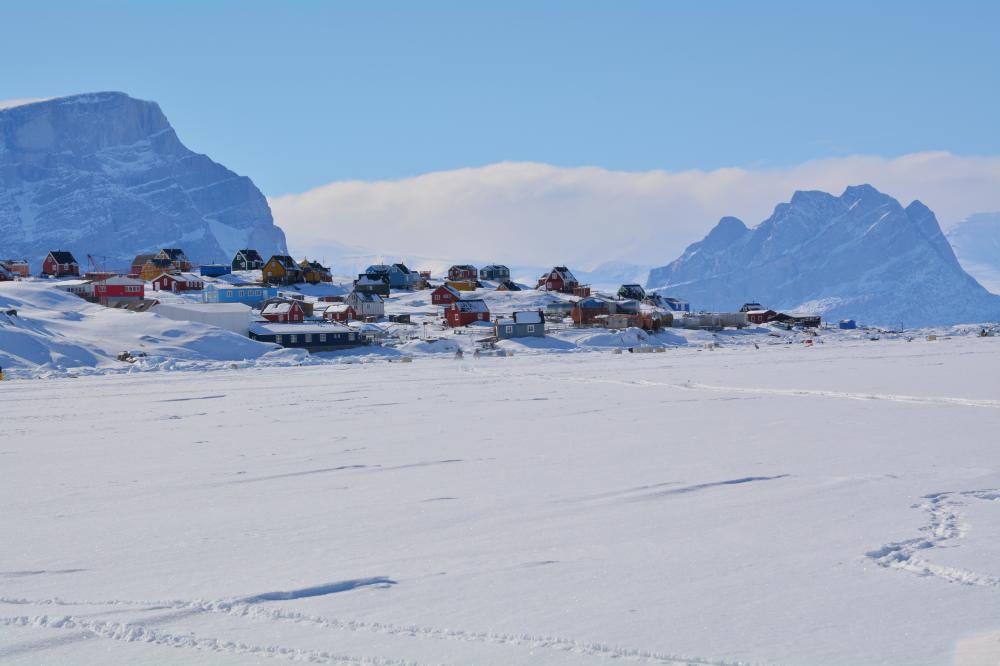
Greenland. Photo credit: ToppGrafisk
At least, that's the official line.
Greenland remains a semi-autonomous territory of Denmark, and Danish Prime Minister Mette Frederiksen has been unequivocal: any American attempt to seize the island by force would mean the end of NATO. Not a weakening. Not a crisis. The end of the transatlantic alliance that has anchored Western security for seven decades.
Trump has publicly fretted about China or Russia getting to Greenland first, prompting European powers into action at unprecedented speed. Britain and Germany are leading military proposals to bolster NATO's presence in support of Danish sovereignty. France, not to be outdone, will open a consulate on the Arctic island next month.
The political stakes couldn't be higher. European leaders are walking a tightrope, desperate to keep the Trump administration onside whilst the Ukraine war adds layers of complexity to every conversation. The problem? Nuance and subtlety aren't exactly the Trump administration's calling cards.
German Chancellor Friedrich Merz has tried to square the circle, suggesting European partners simply want to improve Greenland's security and that they share American concerns. Patrick Sensburg, chairman of the German Reservists Association, has floated the idea of German troops taking special responsibility for NATO's Arctic presence—conveniently gaining training in challenging conditions whilst they're at it.
Britain, meanwhile, is weighing military deployments in response to Russian and Chinese threats. Vladimir Putin, never one for understatement, has warned of 'the end of the world as we know it' should Trump proceed with his plans—this as Germany, Sweden, France, and Norway prepare joint exercises with Denmark's 'Operation Arctic Endurance'.
But here's what nobody's quite saying out loud: Greenland isn't just strategically positioned. It's sitting on vast deposits of rare earth minerals essential for high-tech industries, including the sophisticated defence technologies that every global power desperately needs.
Ian Lesser at the German Marshall Fund of the United States puts it plainly: Trump's security rhetoric is likely pretext for economic objectives. After all, America's military aims could be achieved through negotiated investment rights without trampling over Danish or Greenlandic sovereignty.
And what of Greenland itself? Prime Minister Jens-Frederik Nielsen has made the position crystal clear: Greenlanders don't want American ownership or governance. Many favour independence from Denmark, but faced with a binary choice, they'd choose Copenhagen over Washington without hesitation.
You might think this unanimous NATO opposition would prompt a rethink. But recalibration has never been Trump's forte, has it?
The Roman emperors had a phrase that seems peculiarly apt here: "Exsistit et ergo meum est"—it exists, and therefore it's mine. One wonders if someone might embroider it on a red cap.
The question isn't whether Trump will push ahead despite European resistance. The question is whether NATO can survive him doing so. And whether, in chasing Greenland's riches whilst claiming security concerns, America will trade seventy years of alliance for a fistful of rare earth minerals.
That would be the deal of the century.
Just not in the way Trump imagines.