


search
date/time

Thu, 4:00AM
light rain
14.1°C
SSW 2mph
light rain
14.1°C
SSW 2mph
 | Sunrise | 4:51AM |
| Sunset | 7:24PM |  |

Allison Lee
Smallholding Correspondent
P.ublished 20th June 2026
lifestyle
Nutrition For Small-Breed Pigs
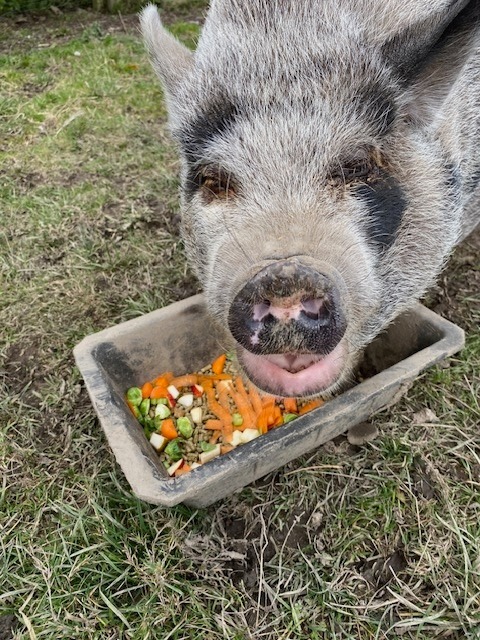
Dotty enjoying dinner
As pot-bellied pigs are usually kept as pets, it is important to understand their natural diet since you are not feeding them to ‘fatten them up for market’. Pigs are often thought of as greedy, and this perception is true whatever their size. I have three pot-bellied pigs on my smallholding, and they would, given the chance, eat all day long. The name itself, ‘pot-bellied’ or kune-kune (which, when translated, means ‘fat and round’), indicates that these little animals have a natural tendency to be stocky. However, it is important to ensure they are also healthy and not overweight, as this can lead to health issues such as joint problems and, inevitably, a reduced lifespan.
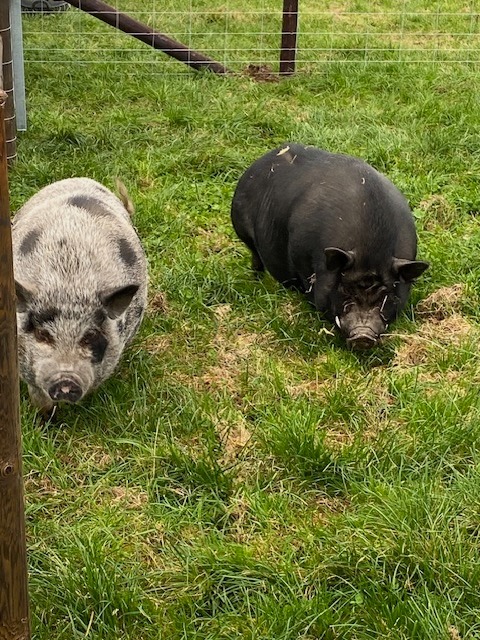
Dotty and Huxley
Controlling what pot-bellied pigs eat isn’t always easy, and much depends on their enclosure and how much access they have to food on a daily basis before you start introducing other feed. If your pigs have access to woodland, for instance, they are likely already consuming decent amounts of grass, nuts and berries, not to mention insects. However, they will quickly devour everything unless they have a large area to roam freely.
I keep my own pigs in a grass paddock and feed them twice a day. It is important to choose a feed that is not ‘commercially’ produced, as this is designed to enable pigs to gain weight quickly for use in the food chain. You need to opt for a specifically formulated feed for pot-bellied pigs, such as Small Holder Feed’s Pot-Bellied Pig Food. This feed is high in fibre whilst being low in calories. It has added herbs to aid digestion and includes vitamins and minerals, ensuring the pigs receive everything they need to stay healthy. Importantly, the feed doesn’t contain any animal by-products or artificial additives.
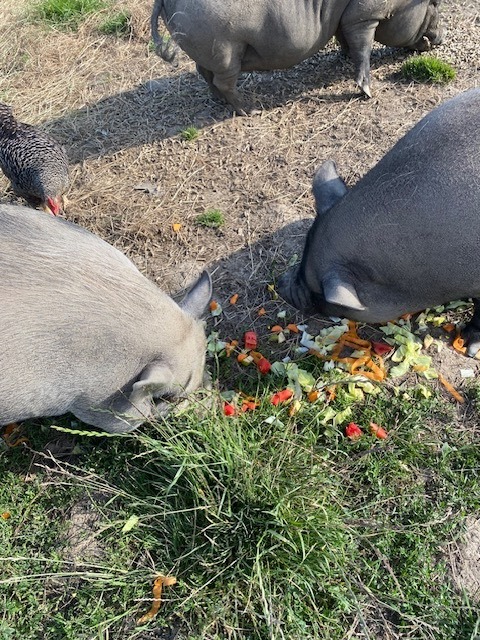
Scattering feed on dry ground
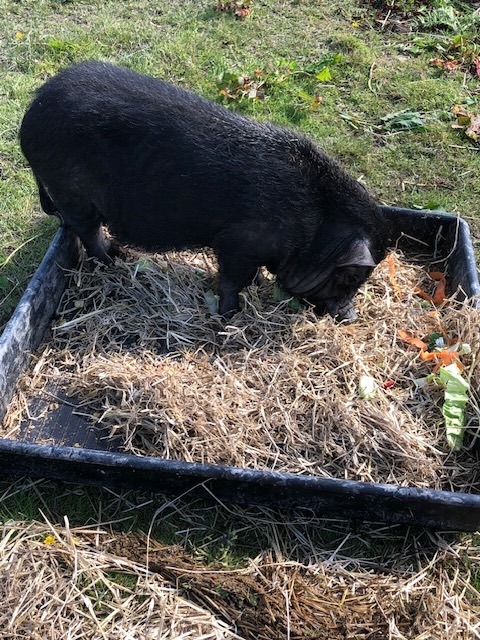
Foraging for feed in hay
Portion size is crucial, as whilst pot-bellied pigs are small, they do have an enormous appetite! A general guide to feeding is to provide 1-2% of their ideal body weight; for example, if the pig should weigh 50 kg, they should get around 500 g - 1 kg of food each day. Ideally, this should be split into two meals, morning and evening, and it must include any added fresh fruit and vegetables that you give. It is advisable to weigh feed, as guessing often leads to feeding far too much.
Supplementing feed with fresh fruit and vegetables is advisable. Not only does this provide variety for the pigs, but it also enables them to access additional, healthy nutrients. Pigs have their own likes and dislikes, and despite their reputation for devouring everything, mine won't touch spinach! I would recommend a variety of root vegetables, such as carrots, swede, and turnips, along with cucumber and courgette. Fresh fruit, in moderation, can also be given, and my pigs love apples, pears, melons, and berries of all kinds. It is imperative that you do not feed any kitchen scraps to your pigs, as this is illegal – even if your pigs are kept as pets!
When the ground is dry, I sprinkle their feed across it, giving the pigs a chance to mimic how they would feed in the wild and root around to sniff out the food. This way of feeding provides exercise, prevents boredom, and slows down the whole feeding process. Puzzle feeders and treat balls are also great ways to feed pigs, as their natural curiosity and skill will help them figure out how to access the food.
Also by Allison Lee...
The Impact Of The Drought On The SmallholdingIt's Showtime!Sourcing A SmallholdingFrom Cattle Trailer To Countryside Icon: The Flower Belt Celebrates Its 5th SeasonTicked Off: Why Ticks Are Thriving This Summer — and How to Stay SafeThe shortened address for this article is: newspub.uk/01ztt
Search Results