


search
date/time
Sat, 1:00AM
light rain
15.7°C
S 12mph
light rain
15.7°C
S 12mph
 | Sunrise | 6:07AM |
| Sunset | 5:39PM |  |

Artis-Ann
Features Writer
P.ublished 21st January 2023
family
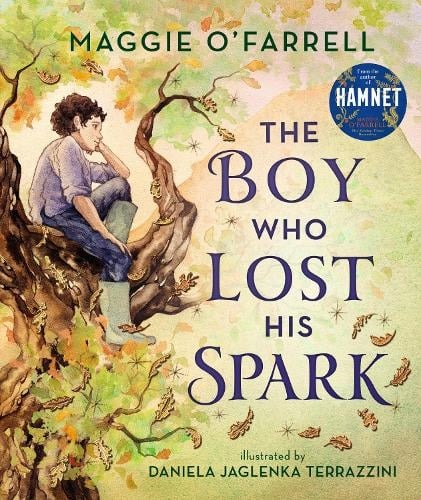
One Was Left Behind: The Boy Who Lost His Spark By Maggie O’Farrell
... that is when the magic happens “like the thaw of ice after a long winter”. I’ll let you read the moment for yourself ...
All sorts of strange things begin to happen and Jem’s sister Verity declares her belief in the ‘noukas’, creatures from an old folk tale she has been told in school. They live in the hill which long ago was a volcano, and come out to cause mischief - and Verity so wants to see one. Close as the siblings are, Jem cannot share her excitement, nor her belief, nor her attempts to search for the noukas. He misses his old life and feels “low and listless”. He is frustrated, upset and unable to open up. He can’t bear to even think about the friends he has left behind and all that was so familiar to him, let alone talk about it. He can’t explain why he feels as he does, and typically, expresses himself instead in angry outbursts and by finding his own space in which to hide.Meanwhile, lurking underground is the last nouka and he feels Jem’s unhappiness. He decides he must do something about it and sets out to cause mischief as only a nouka can, among other things filling Jem’s shoes with conkers, taping up the kitchen cupboards and creating a woollen maze on the stairs. It all serves to make Jem angrier, however, and even more unhappy.
O’Farrell’s imaginative descriptions are wonderfully atmospheric...
In trouble at school for something he didn’t do, Jem is dawdling home when he stops to speak to the old lady who lives next to the school. She tells him about the nouka and about the senseless mischief he causes, but then explains that things which don’t make sense are what make life interesting. The nouka does things “we all have the urge to do but usually stop ourselves”; although, she goes on, maybe we could all do with “a shakeup now and then, to let our wild sides take over”. She explains that it’s hard to believe in something you can’t see but then you can’t see the air that you breathe either, yet you believe in that. Jem thinks about what she says and there is a chink in his armour, a slight lifting of his mood. The mythical nouka is attuned to the hearts and minds of people and O’Farrell describes its magical singing drifting through the air, “and people unknowingly heard its song”. On his way home, Jem senses the presence of, rather than sees, the nouka and “the Earth seemed to stop turning, just for a moment”. The edges were “blurring and dissolving as if he were merging with what was around him” as he determines to see the thing. He stealthily creeps along the ground to where there is a fluttering of the undergrowth, and that is when the magic happens “like the thaw of ice after a long winter”. I’ll let you read the moment for yourself but, as in all good fairy stories, Jem gets his spark back, reunites with his family and finds his peace.
The illustrations by Daniela Jaglenka Terrazzini ... are colourful, detailed and enhance the story on every page ...
O’Farrell’s imaginative descriptions are wonderfully atmospheric, both of the noukas themselves, Jem’s haven in the tree, and of Jem’s difficulties in school - “Numbers and letters wouldn’t behave for him as they did for other people: letters refused to line up into proper words and numbers tended to run away and hide”. Like the spark from a volcano or just like a nouka, he could be “unpredictable, restless and sparky”. O’Farrell is clearly touching upon dyslexia without making it a main focus – perhaps instead, a discussion point between parent and child, if they are sharing this book.This is a beautifully written children’s story, creating magical creatures who are enticing and wholly forgivable. The illustrations by Daniela Jaglenka Terrazzini also deserve a note: they are colourful, detailed and enhance the story on every page, making this a particularly attractive book for the young.
The Boy who Lost his Spark is published by Walker Books
Also by Artis-Ann ...
A Tale Of Death And Life: The Mourning Necklace By Kate Foster…And All That: Bayeux Tapestry The Epic Poem By Martin KiszkoIn For A penny…: In A Summer Season By Elizabeth TaylorThe Suitability Of Love: No Fond Return Of Love By Barbara PymThe Power Of One Voice: Camino Ghosts By John GrishamThe shortened address for this article is: newspub.uk/01iv0