


search
date/time

Thu, 3:00AM
light rain
5.8°C
12mph
light rain
5.8°C
12mph
 | Sunrise | 7:30AM |
| Sunset | 5:06PM |  |
P.ublished 20th January 2026
frontpage
Prostate Cancer Now The Most Common Cancer In The UK
In Yorkshire and the Humber in 2022, 5380 men were diagnosed with prostate cancer
1 in 8 men will get prostate cancer, and for Black men their risk is double. Prostate cancer is curable if found at an early stage, but today kills more than 12,000 men every year. It is the only common cancer without a mass screening programme and often doesn’t have any symptoms for men to look out for in its earlier, more treatable stages. That’s why it is essential for each man to understand his risk and what he can choose to do about it.
Prostate Cancer UK is encouraging men concerned about prostate cancer to take its online Risk Checker. The free and easy-to-use online tool can help men see if they are at risk of prostate cancer in just 30 seconds, and help them understand what they can do about it, including speaking to their GP about a quick and easy PSA blood test, the best first step to check for signs of the disease.
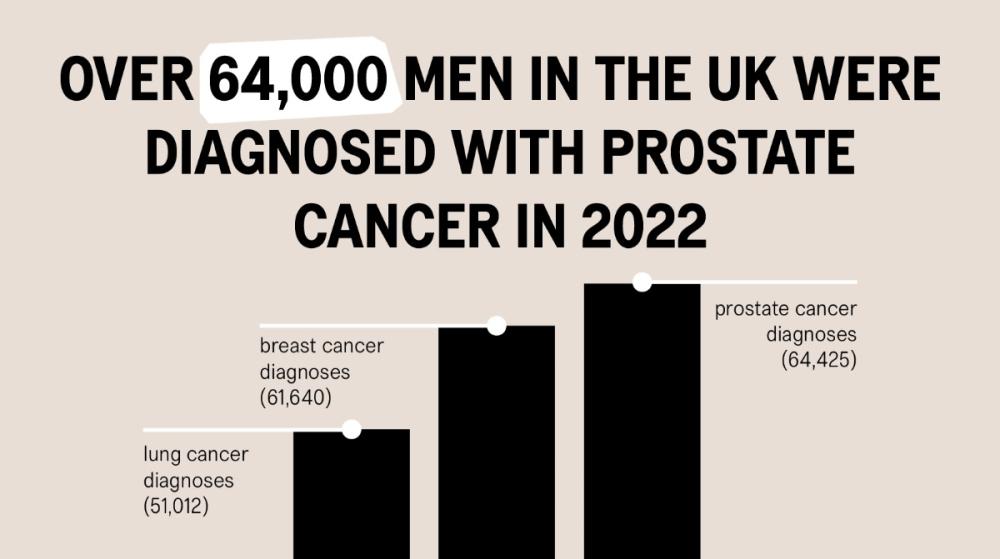
Prostate cancer cases continue to rise across all four nations of the UK. The disease officially became the most common cancer in England last January, with the latest data showing 54,732 men diagnosed in 2022 and 58,137 diagnosed in 2023. But now prostate cancer is also the most common cancer in Scotland overall for the first time, according to latest data from 2023. 5,608 prostate cancer diagnoses were recorded, exceeding that of breast and lung cancer, a 30% increase on previously recorded figures with diagnoses rising from 5,220 in 2022. In Wales and Northern Ireland in 2022, prostate cancer continued to be the most common cancer in men and the second most common cancer after breast cancer, with 2,883 men in Wales and 1,590 men in Northern Ireland diagnosed.
There has also been a 42% increase in diagnoses in the past decade (up from 45,512 in 2012), demonstrating how increased awareness of the disease- led by national campaigns from Prostate Cancer UK and organisations like the NHS, and thousands of men coming forward to tell their prostate cancer stories across the news and social media- has contributed to more men getting diagnosed.
Despite being the most common cancer in the UK, men are still facing huge inequities, and too many men are being diagnosed late, when their cancer has already spread and is harder to treat. In the UK, there is a stark North-South divide when it comes to men getting a blood test for prostate cancer. PSA testing rates are highest in the Southeast of England and lowest in the Northeast of England.
Men are also facing a ‘postcode lottery’ when it comes to finding their cancer early enough for it to be cured. Men living in areas of higher deprivation are 29% more likely to be diagnosed with disease that has already spread than men living in more affluent areas.
This inequity extends between the devolved nations too. According to Prostate Cancer UK’s analysis, although more men are being diagnosed in Scotland, these men are more likely to be diagnosed with prostate cancer at a later stage. 31% of men in Scotland diagnosed with prostate cancer are at Stage 4, compared to 21% of men in England.
One of the drivers of this inequity is that, currently, the responsibility to understand their risk of prostate cancer and contact their GP to discuss the disease and testing rests with men. GPs are currently prevented by NHS guidelines (set by the Government) from proactively speaking to men who have the highest risk of getting prostate cancer about their risk and the option to get a free PSA blood test. As the disease often causes no symptoms in its earlier stages, this situation is contributing to thousands of men being diagnosed late, when their cancer has already spread. Not only that, but the guidelines are followed differently in different parts of the country, further deepening existing inequities.
Prostate Cancer UK is calling on the Government to change these outdated NHS guidelines.
We’re hugely proud to have played our part in the growing awareness of prostate cancer, which has led to more men than ever being diagnosed and treated. But it’s unacceptable that the full weight of responsibility still falls on men to understand their risk and talk to their GP about the pros and cons of a PSA test. Prostate cancer is now the most common cancer in the UK – but despite this, men are facing deeply unfair inequities across the country, and their experiences vary hugely based on where they live. We urgently need an early detection programme that will address these regional inequities.
My message to men today is, find 30 seconds to do Prostate Cancer UK’s online risk checker. It’s free, anonymous and in a few quick questions you will understand your risk and your rights like the 4 million men who have already taken it. Knowing your risk could save your life.
Prostate cancer is curable if found early. That's why it's vital we get the message out to men to think about their risk and to talk to their GP about a simple blood test to check. That way we'll get more men with prostate cancer diagnosed earlier, and we'll save thousands more lives.
It's great that national campaigns by Prostate Cancer UK and others drove more men than ever before to get a diagnosis in 2022. And crucially, this should continue to rise, and I hope that my story will be a part of this national movement as we see the data for more recent years.
What we need now is action to change the system, to enable more men to be diagnosed earlier and stop them getting the news I got. We need GPs to be able to proactively speak to men at highest risk, for example men with a family history like me, or Black men, and discuss the PSA blood test to check for signs of cancer at an earlier stage. It shouldn’t be only men’s responsibility to make these potentially lifesaving conversations happen.
In April 2025, Mike requested a PSA blood test after hearing about Sir Chris Hoy's prostate cancer diagnosis, despite having no symptoms or family history. An elevated PSA reading led to a series of tests and a biopsy, which confirmed early-stage prostate cancer. He chose surgery to remove his prostate, which went smoothly, and his PSA reading is now undetectable. Mike's recovery has been excellent, with minimal side effects. Inspired by Sir Chris Hoy, Mike believes early testing saved his life and hopes to raise further awareness of prostate cancer, encouraging more men to take action sooner rather than later.
Mike said: "Prior to requesting a PSA blood test I had not really looked into this terrible condition, I can put my requesting a test firmly down to Sir Chris Hoy sharing his diagnosis, I thought if a men as fit and athletic as he is can have it then I really ought to get tested, so thanks you Sir Chris, you literally saved my life through your bravery."
If you’re concerned about prostate cancer, you can take Prostate Cancer UK’s quick and easy online Risk Checker to find out your own risk and what you can do about it.