


search
date/time

Sat, 4:00PM
moderate rain
9.8°C
SSE 20mph
moderate rain
9.8°C
SSE 20mph
 | Sunrise | 6:48AM |
| Sunset | 4:48PM |  |
P.ublished 24th October 2026
lifestyle
Road Safety For Young Drivers Plummets When The Clocks Go Back
Image by Patrick on Pexels
In 2025, the accident alert rate rose by 82.4% relative to driving time for the three weeks following the clock-change compared to the three weeks leading up to the end of British Summer Time.
The increase is even more significant considering that people drove 4.57% fewer miles over the same period.
Speeding incidents also declined after the clock change.
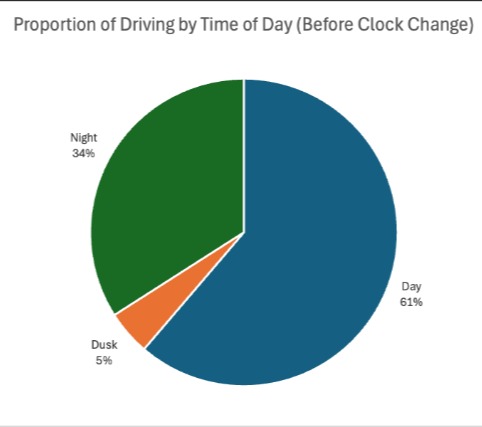
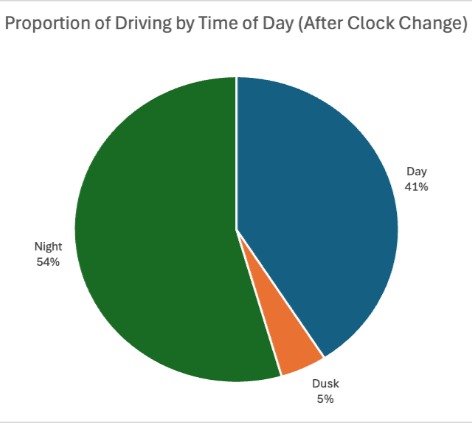
“This data shows, without doubt, that roads become more dangerous after the clocks change in late Autumn.,” commented Dr Carlo Conner-Hill, Head of Data Analytics at ThingCo. “Usual risk factors such as speeding, busier roads and more time spent driving decrease as we enter winter, yet the rate of accident alerts amongst young drivers skyrockets. A major cause of this rise is the increase in daily driving which now occurs when the light level is lower than in the summer months. The clock change pushes the usual peaks in driving such as mid-afternoon school runs and early evening commutes into darkness.”
The majority of users of the ThingCo Theo telematics device are new and young drivers aged between 17 and 25. The new analysis is therefore critical for this high risk group of motorists.
ThingCo analysis revealed a strong correlation between drivers’ propensity to speed, and the light conditions, with less speeding and less driving occurring during the low light hours. However, despite this reduction in speeding and road usage the low light conditions still cause a huge increase in the number of accident alerts occurring during these hours.
Dr Conner-Hill continued: “The clocks will change during half-term in many areas of the UK, meaning those taking time off will see a sudden change in light levels on their journeys once they go back to school, college and work. Those who don’t have time off will still notice a difference as we revert to GMT. As well as taking extra care on the roads, it’s worth checking the vehicle is winter-ready and taking extra care on the roads to reduce the risk of collisions due to lower light levels.”
Check all lights are working and set to the correct angle before driving in low light or darkness
Check tyre condition and pressure to optimise stopping times on dark and potentially wet roads
Ensure all windows and mirrors are clean to increase visibility
Top up screen wash so the windscreens can be kept clean to ensure continued visibility while on the road
Take extra care at junctions where oncoming traffic may be less visible
Be extra vigilant for hard-to-spot cyclists, pedestrians and animals on or near the road
Watch out for speed bumps and potholes which may be harder to see in low light.
The shortened address for this article is: newspub.uk/021dq