


search
date/time

Tue, 1:00PM
overcast clouds
11.6°C
ESE 13mph
overcast clouds
11.6°C
ESE 13mph
 | Sunrise | 6:41AM |
| Sunset | 4:57PM |  |
P.ublished 29th September 2026
lifestyle
The Quiet Adjustments: Why Yorkshire Needs To Talk About Pelvic Floor Health
A Halifax clinic says too many women are rearranging their lives around a problem nobody mentions
Amanda Coates
It starts with small things: skipping the jumping in an exercise class, choosing the aisle seat, bracing before a sneeze, and slipping a pad into the handbag "just in case". Over time, those small things accumulate, and life gradually becomes more limited.
"Women come through our doors telling us about the small adjustments they've gradually made to their lives," says Amanda Coates, co-founder of Live Right Body Wellness, an independent health, wellness and aesthetics clinic in Halifax. "Avoiding certain exercises. Knowing where every toilet is. Worrying about coughing, sneezing or laughing. Sometimes stepping back from activities they used to love."
Bladder leakage and weakened pelvic floor muscles are often linked to childbirth, the hormonal changes of menopause and simply getting older. What troubles Amanda is not how common the problem is, but how readily it is accepted.
"Often they've simply accepted it as part of having children, menopause or getting older," she says.
The goals the clinic's clients bring with them are strikingly modest: getting back to exercise with confidence, enjoying a day out, travelling without anxiety. Modest, that is, until you consider what their absence costs.
"Those might sound like small things, but when you hear what they mean to somebody's confidence and quality of life, they really aren't," Amanda says. "Living your best life isn't about pretending ageing doesn't happen. It's about helping people keep doing the things that matter to them as they move through different stages of life."
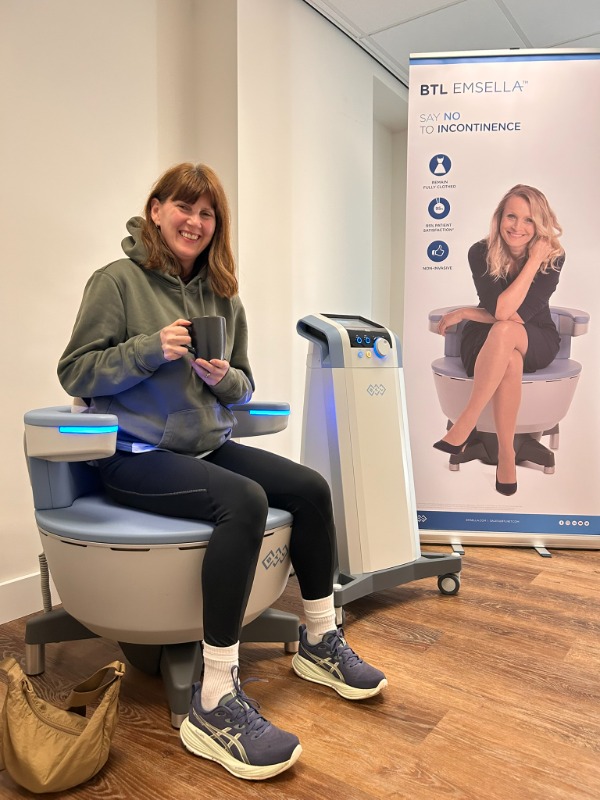
It is, Amanda concedes, an eye-catching way into the conversation. But she is keen that the chair should not steal the limelight. "The chair isn't really the story. The people sitting in it are."
For women experiencing symptoms, a GP remains a sensible first port of call, and the NHS can refer patients to specialist pelvic health physiotherapy. The broader point, Amanda argues, is that nobody should suffer in silence without first asking what help is available, whatever route they eventually choose.
The clinic itself was born of a conviction that access to newer health and healthy-ageing treatments should not stop at the edges of the big cities.
"Live Right was founded in Halifax because we wanted people in our part of the world to have access to technologies and conversations that aren't always readily available outside larger cities," she says.
This October, she hopes Yorkshire will start that conversation in earnest: about why so many women still feel embarrassed and why a problem so often dismissed as trivial can shape so much of daily life.
After all, the bravest thing some women will do this month is not a marathon or a mountain. It is simply to mention it.
For more information click here
The shortened address for this article is: newspub.uk/0213d