


search
date/time

Thu, 4:00AM
clear sky
16.4°C
SE 8mph
clear sky
16.4°C
SE 8mph
 | Sunrise | 4:38AM |
| Sunset | 7:40PM |  |

Steve Whitaker
Features Writer
@stevewhitaker1.bsky.social
P.ublished 14th April 2026
arts
Through A Glass Darkly: Heimat By David Rose
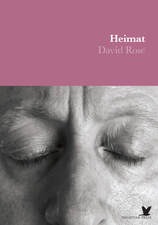
Rose deals with compromised memory by negotiation of form: the insinuation of italicised hiccups, of short utterances that question the integrity of his own powers of recall with counter-intuitive supposition or rational assertion, acts, instead, to reaffirm his personal integrity, to yield a comprehensive, and therefore sincere, account of what it means to glance backwards when the past is long distant and truth does not always accord with remembrance. The process of insinuation recalls Rose’s recent collection, Interpolated Stories, whose use of the form both inter- and intra-narrative, gives ironic coherence to a series of, seemingly unconnected, stories.
If any shared commerce is incidental, then the halting nature of this instinctive irruption, this check, on the veracity of remembrance, lends both books an extra illuminating dimension. Which is not to say that Heimat, be it fiction, biography or autobiography, is not also satisfying, moving and instructive. Structure, though staccato, does not impose a straitjacket on honesty of motive, or clarity of expression, even where a memory of early childhood is complemented by an extraneous voice whose maternal presence is calculated to reinforce, rather than undermine, the power of moments. The litany of lullabies, even perceived through the broken lens of conflicted memory, carries the undiluted weight of time in its wake:
‘Where have you been all the day Billy Boy, Billy Boy What shall we do with the drunken sailor Dashing away with the smoothing iron Oh Danny Boy the pipes the pipes are calling’
The dearth of punctuation here and throughout the piece allows the narrative to follow an ad hoc train of thought, a stream of consciousness that works to persuasive effect in the context of a sustained reflection. Moving from a critically self-reflexive opening commentary – a kind of open negotiation with the means of exposition – Rose works through his child and adulthood, whilst the articles of the present, the hard-drive memory, the need to preserve text, create a digital palimpsest of his experiential journey.
A skilled recalibration of time and place allows the narrator to graft hindsight – knowledge, wisdom – onto nascent vulnerability, to dissolve the sharper edges of memory that are so beautifully realised in Rose’s rendering. When we arrive at the suggestion of mortality, it is viscerally drawn – the panic attacks and night terrors begin to melt only when Rose’s narrator is able to soften the prospect of death with the comforting certainty of cosmic nothingness. When the eyes finally close, memory ‘unspools at breakneck speed’, disclosing, in Rose’s eloquent and affecting final lines, a vision, before annihilation:
‘...affording a recognition of that face in the mirror from glen to glen before the spool rewinds into the cosmic memory and down the mountain side home and dry.’
More information here.
Also by Steve Whitaker...
Citizens Of Nowhere: Journeys Of Hope - The Letters Of Meyer And Sonia By Alison MarshallPoem Of The Week: The Pheasant By Ali LewisPoem Of The Week: Dicks By Eoghan WallsPoem Of The Week: Marky By Ian DuhigPoem Of The Week: Heredity By Thomas Hardy (1840-1928)The shortened address for this article is: newspub.uk/01z32
Search Results