


search
date/time

Sat, 10:00AM
light rain
10.9°C
NNW 4mph
light rain
10.9°C
NNW 4mph
 | Sunrise | 4:12AM |
| Sunset | 7:49PM |  |
P.ublished 29th April 2026
business
Opinion
What Investors Are Looking For In Yorkshire Health Scale-Ups
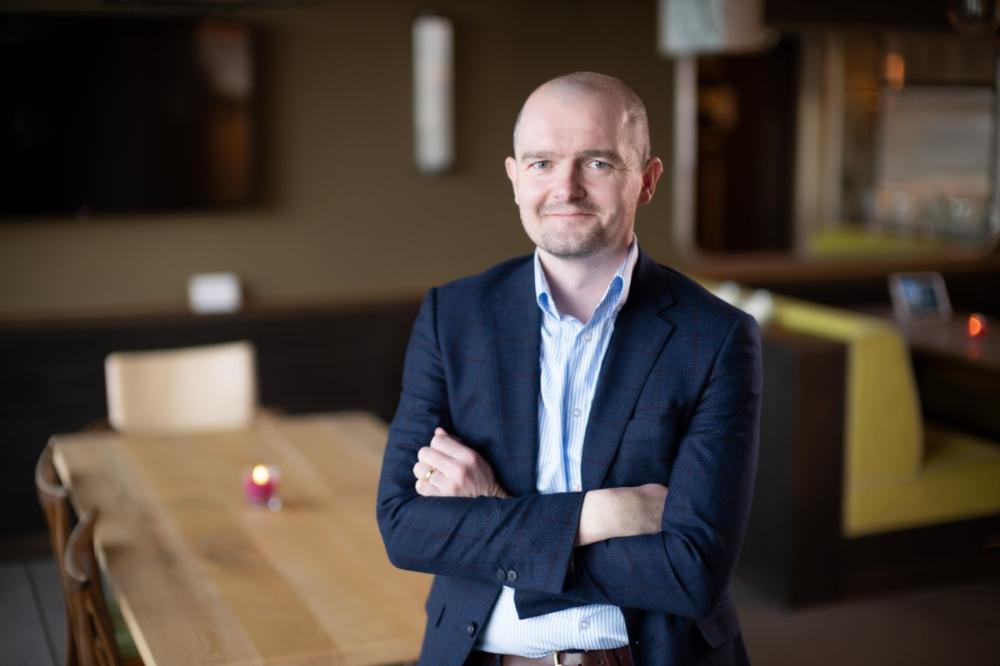
Chris Boyes, Investment Partner, BGF, Yorkshire and the North East
Leeds is already recognised as one of the UK's leading healthtech clusters, and the expansion of the Leeds Innovation Arc signals real institutional confidence in the region's next wave of health and life sciences businesses. For the more mature operators looking to scale beyond their current footprint, however, the path to investment requires understanding what investors are specifically looking for and building towards it deliberately.
Below are some of the criteria investors are using to assess scale readiness in healthcare and where regional businesses most commonly fall short.
1. Care quality: the non-negotiable threshold
Quality of care is the first and most important test. No amount of financial performance can compensate for weak care standards. If that threshold is not met, investment appetite disappears quickly, and rightly so.
Investors examine this closely, drawing on independent quality indicators from external regulators such as the Care Quality Commission alongside internal measures including serious incident reporting, complaints data and patient outcomes. What they are ultimately assessing is whether excellent outcomes can be delivered consistently, and whether those standards can be maintained as the business scales.
For investors, this is the clearest signal that growth can be achieved without compromising patient trust or clinical integrity. A business that has built genuine operational discipline around care quality has, in effect, already addressed the hardest part of the investment case.
2. Leadership: the multiplier
Ambitious growth plans require a leadership team with a demonstrable track record of executing them. Investors want confidence that management can translate strategy into repeatable expansion - whether through new site rollouts, acquisitions or service-line extensions.
Evidence of successful acquisition and integration is particularly valuable. Just as important is sustained performance across a business’s existing estate, which offers a reliable indicator of how future locations or services are likely to fare under the same leadership.
The most investable teams combine healthcare credibility with commercial discipline. Clinical leaders help ensure services remain safe, effective and patient-centred; experienced operators build the foundations for scalable growth. In a sector shaped by the interplay of private providers, local authorities and the NHS, investors place real value on leadership that understands both the care pathway and the economics behind it.
3. Workforce: the operational signal
In healthcare, people are the core delivery mechanism for everything the business promises to patients and commissioners. The ability to attract and retain specialist talent is a critical marker of long-term strength, particularly amid sustained workforce shortages, heightened competition for skilled professionals and more constrained international recruitment routes.
Investors want to see evidence that the business can compete for talent and, crucially, keep it. The strongest operators demonstrate clear career progression pathways, structured development and apprenticeship schemes, competitive reward structures. Retention metrics are also indicative of the culture of a healthcare organisation. The ability to maintain a culture that supports professional wellbeing - without compromising operational performance - is critical for investors to see in a scaling organisation.
Leeds-based Bayfields Opticians offers a clear illustration of why culture matters so much in healthcare investment readiness. As the business has grown from a single practice to a multi-site group with the support of BGF, it has deliberately reinforced its strong culture, particularly through acquisitions and site integrations.
For investors, this matters because a weak culture directly affects performance through poor productivity, inconsistent patient experience and elevated staff turnover. A strong one, on the other hand, supports engagement, retention and better decision-making across a growing estate.
Bayfields’ experience also highlights a leadership principle that is easy to underestimate: culture must be owned at the top. When senior leaders actively position themselves as guardians of organisational values, those values become embedded in everyday decisions rather than confined to HR processes. That clarity is especially critical in buy-and-build strategies, where newly integrated teams may arrive with different ways of working.
For healthcare founders pursuing acquisition-led growth, the lesson is straightforward. Culture must not be treated as a soft metric - it is an operational asset that shapes behaviour, protects standards and determines whether each new site strengthens the platform or fragments it.
4. Resilience: the stress test
Healthcare businesses operate in an environment where disruption can arrive from multiple directions simultaneously: economic pressure, policy reform, staffing shortages, public health events, or shifting referral routes. Investors understand this, and they assess resilience accordingly.
What they are looking for is evidence of how management responds when conditions change or setbacks occur. Adaptability needs to be embedded in the operating model: reflected in workforce planning flexibility, service delivery options, pricing structures and route-to-patient strategies. It also requires leaders with the mindset to anticipate volatility rather than assume linear growth.
The most attractive healthcare businesses are built to absorb shocks, adapt quickly and continue delivering quality care through periods of sustained uncertainty. That capacity for resilience, demonstrated over time, is what allows investors to underwrite not just the business as it stands today, but the business it is trying to become.
Leeds-based Springfield Healthcare illustrates how long-term investment partnerships can support ambitious expansion in complex, capital-intensive healthcare models. Starting as a single care home, the business scaled into a six-site care village operator across Yorkshire, supported by £31 million of growth capital over a 12-year partnership with BGF.
That funding enabled both new site development and significant reinvestment into existing facilities, including major redevelopment projects that strengthened the quality and capacity of the estate. For investors, Springfield underscores the importance of patience and alignment in healthcare scale-ups. Expanding care villages requires sustained capital commitment, careful planning and a consistent focus on care quality as infrastructure and operations evolve.
A key factor in the group’s growth was the combination of financial support and active strategic input. Alongside funding, the business benefited from governance support and senior leadership appointments, which professionalised operations as the organisation expanded. This blend of capital and operational expertise is often what enables healthcare businesses to move credibly from single-site providers to regional platforms.
The model reinforces that scale must be matched by standards. Even as Springfield expanded, the emphasis remained on maintaining high-quality care environments and strong local delivery teams. That balance between growth and consistency is what allowed the business to build a larger footprint without losing its core service focus.
The investment outlook for regional health businesses
The fundamentals of the healthcare investment case have not changed: high standards of care, strong leadership, workforce stability and a resilient operating model remain the criteria against which regional businesses are measured.
What has shifted is the pace and focus of investor interest. Continued consolidation across multiple healthcare sub-sectors, demographic-driven demand from an ageing population, and technology-led improvements in clinical outcomes are all sustaining appetite among growth investors. For healthcare businesses in Yorkshire, those best placed to access that capital will be the ones that have done the disciplined operational work as well as having ambitious growth narratives.
For regional health founders, the clearest opportunity lies in closing the gap between clinical ambition and investment readiness. Yorkshire businesses that do so systematically - building quality infrastructure, professionalising leadership and demonstrating workforce resilience - are the ones most likely to secure the partnerships that allow genuine scale.