


search
date/time

Sat, 4:00AM
scattered clouds
10.8°C
W 14mph
scattered clouds
10.8°C
W 14mph
 | Sunrise | 6:22AM |
| Sunset | 5:20PM |  |

Andrew Palmer
Group Editor
P.ublished 18th September 2026
arts
Wild Pages Turn: Nature Writing's Biggest Night Crowns Birds And Lost Worlds
Wainwright Prizes honour illustrated books on Britain's wildlife and prehistoric past
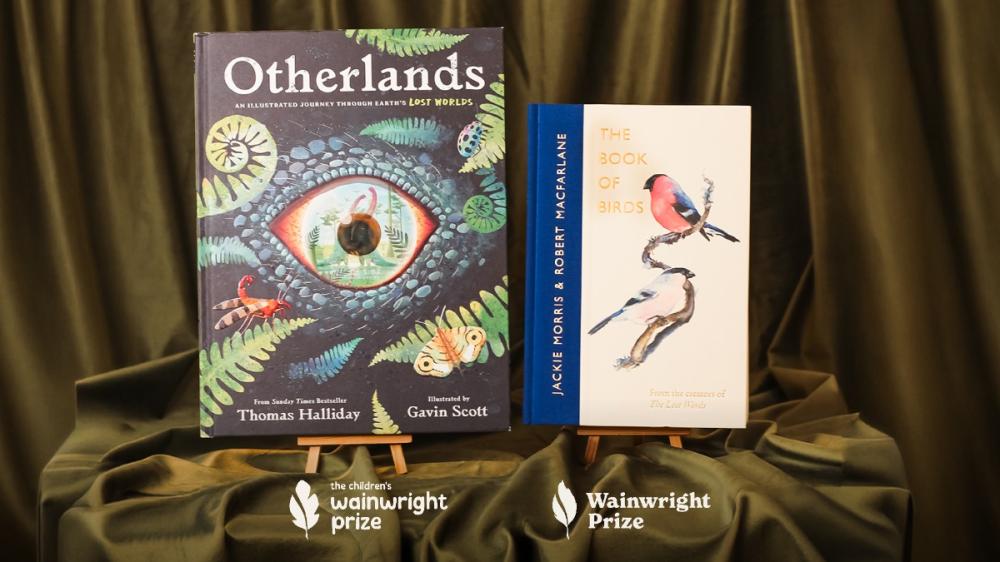
The Book of Birds, by Jackie Morris and Robert Macfarlane, was named the 2026 Wainwright Prize Book of the Year at a ceremony held on Thursday at the Elmley Nature Reserve in Kent, hosted by Times journalist and prize ambassador Henry Bird. The book, which the judges called "an utterly beautiful book to treasure", asks not what a bird is but who it is — a question with some urgency, given how many of Britain's bird species are now in decline.
Book of the Year: The Book of Birds — Jackie Morris & Robert Macfarlane
Children's Book of the Year: Otherlands — Thomas Halliday, illus. Gavin Scott
Nature Writing: Ancient: Reviving the Woods That Made Britain — Luke Barley
Conservation Writing: The Savage Landscape — Cal Flyn
Illustrative Books: The Book of Birds — Jackie Morris & Robert Macfarlane
Children's Fiction: The Danger of Small Things — Caryl Lewis
Children's Non-Fiction: Otherlands — Thomas Halliday, illus. Gavin Scott
Children's Picture Books: The Great Bear — Annie Booker
The Children's Wainwright Prize Book of the Year went to Otherlands: An Illustrated Journey Through Earth's Lost Worlds, Thomas Halliday's adaptation of his own bestselling adult title, illustrated by Gavin Scott. Judges praised its "deeply knowledgeable" tour through the planet's extinct ecosystems, calling it a "breakthrough children's classic that will endure for decades". The original book was highly commended at the 2022 Wainwright Prize; its junior edition has now gone one better.
Woods, wilderness and a world without bees
Beneath the two headline prizes sat six category awards, each carrying its own argument about what nature writing is for. Luke Barley's Ancient: Reviving the Woods That Made Britain took the Nature Writing prize for its attempt to reacquaint readers with Britain's old woodland. Cal Flyn's The Savage Landscape, which asks how the world's most inhospitable places might yet be preserved, won Conservation Writing. The Book of Birds added the Illustrative Books category to its Book of the Year win.
Among the children's prizes, Caryl Lewis's The Danger of Small Things — set in a world where the bees have vanished — won Fiction, its premise rather less speculative than it might once have seemed. Annie Booker's The Great Bear, a picture book about human impact on the Arctic, won its category, and Otherlands added Non-Fiction to its overall win.
A clutch of highly commended titles rounded out the shortlists, among them Nicola Chester's Ghosts of the Farm, Julia Shaw's Green Crime, Suzanne Simard's When the Forest Breathes and Alison Pouliot's fungi study Funga Obscura.
A prize built on Wainwright's own values
Wainwright Prize director Alastair Giles said the entries showed "just how vital and vibrant nature and conservation writing has become, not only as a form of creative expression, but as a force for change". Six head judges oversaw the categories, among them 2024 winner Michael Malay, Guardian biodiversity reporter Phoebe Weston, and ornithologist and author Mya Rose-Craig — with the overall winners decided by a separate executive panel drawing on their recommendations.
Each overall winner receives £2,500; category winners £500. Awarded annually since 2014 in honour of Alfred Wainwright, the prize was founded by publisher Frances Lincoln with the National Trust, and continues to be backed by the RSPB, the Wildlife Trusts, National Geographic Kids and the National Literacy Trust, among others.
Last year's Book of the Year was Chloe Dalton's Raising Hare; the year before, Michael Malay's Late Light. This year, fittingly for a prize that takes its name from a man who spent a lifetime looking closely at the land beneath his feet, both top honours went to books that ask readers to look more closely still — at the birds outside the window, and at the vanished worlds beneath them.
Also by Andrew Palmer...
Classical Music: Sol Gabetta Saint-Saëns & Lalo Cello ConcertosClassical Music: The Beethoven Connection Volume 2Classical Music: Gershwin VariationsClassical Music: Softest ThunderRank's Gong To Sound Again On Hull's WaterfrontThe shortened address for this article is: newspub.uk/020z4