search
date/time
 | Yorkshire Times A Voice of the Free Press |

Artis-Ann
Features Writer
P.ublished 20th December 2025
arts
All The World’s A Stage: Upside Down & Only The Brave By Danielle Steel
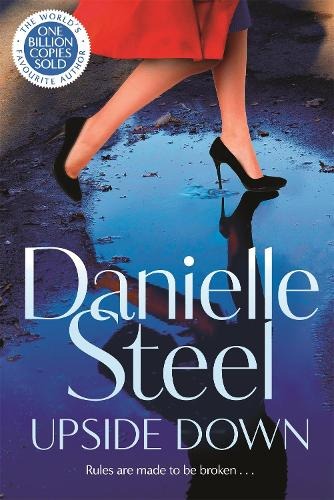
Upside Down begins with the glamour of Hollywood. It’s a contemporary setting although the golden couple, Ardith and her long-term partner Bill, are everything you would expect from very well-established stars. Ardith in particular, is the beautiful, timeless star, with films and awards almost too numerous to mention. Hers has certainly been a successful career and she still enjoys the luxury of being able to choose her next great script.
It takes a certain selfishness to achieve such success in the cut-throat world of cinema, however, and it seems that Morgan, Ardith’s only daughter, a practising surgeon, harbours a chip the size of a tree trunk because her mother ‘was never there’. The job always came first even when her father died when she was only seven. He was with his mistress at the time and Ardith had to cope with the scandal as well as the grief; as ever she sank herself into her work, neglecting her daughter, emotionally at least. Mother and daughter are not close.
Bill is a lesser star but has been Ardith’s companion for the last twelve years. Theirs is a comfortable relationship, if not exactly passionate. She can trust him and he loves her. At 78, he, too, is still working and when he goes away, filming on location in London, his producers send an assistant to help Ardith in his absence. Her first meeting with Josh, an out of work actor, is not auspicious but tragedy has a way of sharpening the emotions and it is Josh who is there to help rather than Morgan, who instead feeds her anger towards her mother as she endures her own dramas in New York.
Living in Yorkshire with my feet firmly on the ground, it’s a bit of escapism (although I can admit to riding pillion on a Harley in my not-too-distant past and appreciate the sense of freedom Ardith briefly experiences). It is a work of fiction and, I suppose, a bit too far-fetched to be credible but that doesn’t mean to say it isn’t – I’ve never lived in Hollywood so who am I to judge - and anyway, do you want escapism to feel real?
The drama in New York unfolds when Morgan’s new partner, Ben, discovers the dangers of being good looking, charming, wealthy and famous, and an unscrupulous young woman tries to take advantage in a way which could ruin him. We hear of so many genuine cases these days, that we forget that some people will play a more sinister and dangerous game for their own benefit, not caring what havoc and pain they cause their innocent victims. Smoke and fire spring to mind even when there’s not a spark of truth.
The narrative follows a bumpy path. Each time things seem to be settling down and even going well, there is another hurdle and that is the pattern for several chapters. As each obstacle looms ahead, the sense of peace is shattered once more until, as you would expect, ‘all’s well that ends well’.
Love, Steel tells us, has no age barriers. What’s 20 years between lovers? In the same way you had to believe in love at first sight when you read Romeo and Juliet, so too, in this, you have to accept that love is blind to the age gap even if, of course, that brings its own issues. In this case, both in New York and Hollywood, the issues have to be dealt with and there are conundrums, a degree of secrecy, blackmail, court cases, scandal, heartache and the rest, before a suitable conclusion is achieved and it’s all happily put to bed. That’s what I mean about a safe read; there is the predictability that there will be a satisfactory ending whatever circuitous route Steel takes to get you there. I would say it’s a bit like watching a Bond film knowing that 007 will never die…but that might not be the best example.
At the start of this review, I promised you a second one which appears quite different so here goes….
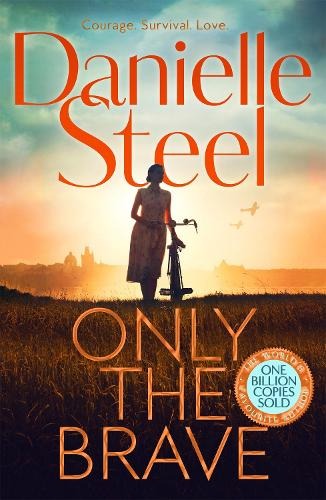
The year is 1939 and the setting is Germany so it will come as no surprise that Only the Brave has a darker tone from the outset as Steel proves she can deal with difficult subjects. Sophia Alexander and her family make of life what they can despite the sense of hopelessness which invaded the lives of so many at that time. They are a disparate group but the principal protagonist is Sophia herself, the quiet, studious and caring daughter of Monika and Thomas who is an eminent doctor. Sophia is also sister to the younger, more flirtatious and fun-loving, Theresa.
At the start of the novel, the systematic persecution of the Jews is well underway and while she understands that nothing can be discussed openly, Sophia cannot stand by and simply watch the horror taking place in the name of the Reich. She attends meetings of a local dissident group which can only mean trouble. The secret nature of their activities emphasises the danger whilst highlighting the existence of heroes who went unnoticed; it was the only way to avoid certain death. Steel makes clear that not all Germans were followers of Adolf Hitler.
Even the eminent doctor cannot save her when Monika contracts TB and after his wife dies, Thomas works even harder at the hospital he owns and runs. He has no time for politics, his only creed is helping the sick, whoever they are. Theresa marries at eighteen, entering a wealthy and well-established family within the cream of society. Sophia is lonely but intent on completing her nurse’s training. She also has a strong religious belief and feels a calling to the Church. Despite her father’s lack of understanding, she decides to enter the convent of The Sisters of Mercy where she can continue to help those who need it most.
There is a depth to this novel given its setting and Steel is not slow to outline the steps taken by the Nazis in their desire to create a pure Aryan race. The introduction of laws limiting the freedoms of Jews, the prisons, the death camps and the systems of euthanasia she describes, are all the more appalling because we know they were fact. The ‘purification of the Master Race’ meant ‘no defects, no substandard conditions’ could be tolerated by the Reich, and medical personnel had to comply with the new laws, effectively condemning innocent men, women and children to death. ‘Euthanasia was an effective alternative to treatment’ and all part of Hitler’s plan to create a perfect race but it was an ‘inhuman selection process and not a mercy killing’.
Steel uses her novel to highlight the heroes whose activities had to be clandestine and two such heroes are Sophia and her father. Life unexpectedly and suddenly sours for Theresa who is forced to escape to Switzerland with her husband while Sophia and Thomas stay in Berlin, each hoping to play their part in saving innocent lives. Sophia and Thomas endure very different conditions from the life of self-indulgence which Theresa and Heinrich enjoy, albeit in exile. Thomas is a man of principle and discovers the painful cost of not complying with the orders of the Reich even when they are couched as requests. He has taken an oath to save life whenever possible and he will not betray it. Sophia is also forced to pay the price of his actions. She is arrested and imprisoned in Ravensbrück where, to describe conditions as harsh, is an understatement of some magnitude, but her bravery sees her through. Although she escapes, her war is not over and her selflessness is a beacon in a dark world.
It might not be a true story, it might be a little too good to be true on occasions, but the essence of the narrative is plausible. The treatment of so many innocent people by the Nazis was hellish and Only the Brave gives a flavour of it at least. It reminds us of what happened and as every year passes, distancing us still further from the atrocities, we need to be reminded. We need to remember, if we are to learn from the past.
Steel explores the notion of human strength and resilience as well as vocation and dedication, of finding the right path. Sophia knows she has done some heroic things, saved lives and risked her own more than once, but says you do them in time of war ‘because you have to’. She is uncertain what the peace will bring but when the time comes, she accepts the path presented to her and is resolute in her final decision.
Also by Artis-Ann ...
Careful What You Wish For: I Did It For You By Amy EngelFriends And Neighbours: Over The Fence By Karen Haase And Julie Martin-JonesWall To Wall Christmas: Christmas With Anton du Beke And FriendsSnapshots of a Life: Heartchery by Martin KiszkoMaking Ends Meet: The Pearl Button Girl By Annie Murray