search
date/time
 | Yorkshire Times A Voice of the Free Press |

Artis-Ann
Features Writer
P.ublished 3rd January 2026
arts
Friends And Neighbours: Over The Fence By Karen Haase And Julie Martin-Jones
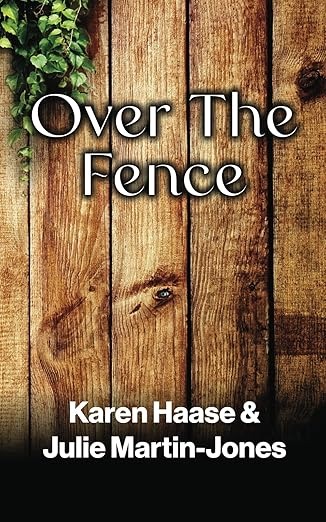
In one house, we have ‘Clarissa the Cow’. She is well established in the neighbourhood and regards herself as a pillar of the well-heeled community. Her husband is Michael and it doesn’t take long to realise that theirs is a strange relationship. Coercive control does not begin to describe Michael even though Clarissa does not realise it. In fact, Clarissa seems to understand very little of what goes on around her, not least Michael’s relationship with their good friend, Seb.
Seren and Bobby have just moved north, into what they thought was a dream home which they could make their own. He is the new GP, joining the busy local practice and she is a stay-at-home mum of two little boys and a growing menagerie of pets. Outwardly, Seren may appear a little ditzy but she is a loving and well-meaning friend, wife and mother.
Doing what seems right is not always the right thing to do. Relationships are often not what they appear to be. Society’s rules thankfully change with the times
Clarissa takes an instant dislike to ‘the new people’. In her view, they are not the right sort for the respectable neighbourhood and she cannot understand why some of her more eminent ‘friends’ appear to also be friends with the new neighbours from hell. She does her best to make them leave, calling the fire brigade when they have a barbecue, writing malicious letters to the doctors’ practice and to Seren herself, repeatedly turning away the delivery van with Seren’s new oven because it is dirty and not appropriate to the area, attacking their visitors with no parking notices…the list of her antics goes on and Seren cannot understand what she has ever done to Clarissa to make her act in this way. She even takes gleeful delight in terrorizing ‘the blue-eyed brat’ from next door. Frank, the younger of the two boys, calls her ‘the ghost lady’ although his parents have no idea who he is referring to and believe it is some imaginary friend. Michael’s behaviour is, if anything, even more malicious, particularly when he reports Seren and Bobby to the police who fortunately seem to interpret things for what they really are.
The lives of the two households are revealed through alternating journal entries, written by Seren and Clarissa, which describe events from differing points of view. It’s an interesting device which works effectively as the reader learns as much from what is not said as from what is actually written down. It is also necessary to read between the lines somewhat, to become acquainted with the characters who do become very familiar. The humour is sharp, a tart wit rather than rip-roaringly funny because so much of it is associated with the warped view of Clarissa who does not understand irony.
The humour is sharp, a tart wit rather than rip-roaringly funny because so much of it is associated with the warped view of Clarissa who does not understand irony
The clues as to the twist at the end are dropped like breadcrumbs but the full story is not revealed until the final chapter. Be careful what you wish for, Clarissa, these things have a habit of coming to bite you.
This highly compelling read tackles all sorts of issues. Doing what seems right is not always the right thing to do. Relationships are often not what they appear to be. Society’s rules thankfully change with the times. An over-active imagination can do great harm and what is obvious to some is not always obvious to others.
I’m not sure this review does the book justice: I loved it.
Also by Artis-Ann ...
Careful What You Wish For: I Did It For You By Amy EngelAll The World’s A Stage: Upside Down & Only The Brave By Danielle SteelWall To Wall Christmas: Christmas With Anton du Beke And FriendsSnapshots of a Life: Heartchery by Martin KiszkoMaking Ends Meet: The Pearl Button Girl By Annie Murray