


search
date/time

Mon, 4:00AM
broken clouds
10.4°C
WSW 4mph
broken clouds
10.4°C
WSW 4mph
 | Sunrise | 5:47AM |
| Sunset | 6:07PM |  |

Andrew Palmer
Group Editor
P.ublished 29th August 2026
arts
Review
Classical Music: Cinquième Symphonie Vierne
French mysticism and colour brought vividly to life on Buckfast's Ruffatti
Vierene Organ Symphony no.5 in A minor, op.47; Duruflé Prelude, Adagio et Choral varie sur le theme du 'Veni Creator', op.4; Prelude sur l'Introit de l'Epiphanie, op.13; Tournemire Fantaisie-Improvisation sur l'Ave maris stella
Charles Maxtone-Smith plays the Ruffatti organ in Buckfast Abbey.
AD FONTES AF016
https://www.adfontes.org.uk/
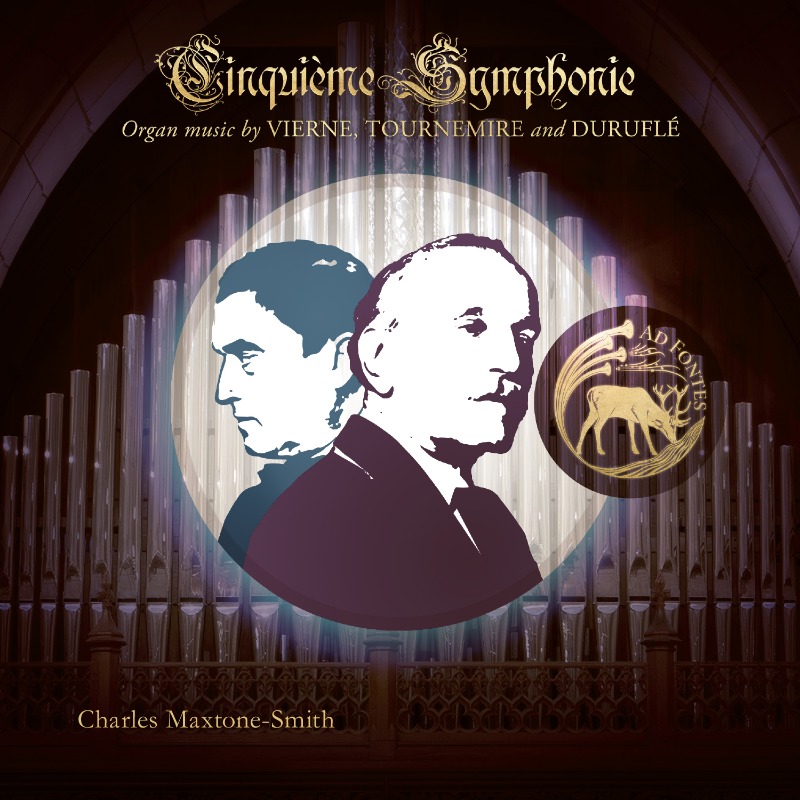
Charles Maxtone-Smith is Organist of Buckfast Abbey and currently takes lessons in Paris, studying French Baroque and Romantic literature. His interpretation of these French organ works highlights the Buckfast Abbey instrument to great aplomb.
Louis Vierne was the semi-blind organist of Notre-Dame who died from a heart attack while playing a recital in the cathedral on the evening of 2 June 1937. The Fifth Symphony, composed between 1923 and 1924, is in five movements, and the sounds Maxtone-Smith conjures from it are infectious.
As Maxtone-Smith observes in one of the most engaging accompanying booklets I have read in a long while, the Wagnerian, Tristanesque soundworld is immediately apparent, and it is notable that the very first chord echoes the famous "Tristan chord". This is a tremendous reading of a symphony that has never quite won the popularity of Vierne's others, and the recording does it full justice.
Tournemire's Fantaisie-Improvisation sur l'Ave maris stella, as transcribed by Duruflé, carries all the mysticism one would hope for, its harmonic palette by turns luminous and shadowed. There is a great deal going on beneath the organist's hands, each manual contributing its own thread to a kaleidoscopic tapestry of sound, and the instrument is shown off superbly, not least in the surge to full organ and the carefully judged retreat down to pianissimo.
Across this all-French programme, the different ranks of pipes are deployed to glorious effect, whether diapasons, reeds, or strings, and the tonal richness Maxtone-Smith draws from them entices the listener further into this repertoire. The disc also includes two lovely Duruflé pieces: the Prélude sur l'Introit de l'Épiphanie and the Prélude, Adagio et Choral varié sur le thème du Veni Creator, dedicated, characteristically, to Vierne. The flutes and soft reeds are given an exquisite outing, the finely balanced pedal lends real ambience, and Maxtone-Smith's control of the swell box heightens the sense of drama throughout these atmospheric works. The Choral varié is mesmerising from its opening bars, building steadily towards a close of dazzling technical assurance and sonic splendour.
Devotees of the organ and of French organ music in particular will relish this disc, as will anyone drawn to the sheer variety of soundscapes this instrument can conjure. The recording engineers deserve real credit for capturing the sound so faithfully, not least in the hushed pianissimo passages; together with the booklet and the playing itself, this is a first-class production, and I would happily hear more from this label.
Also by Andrew Palmer...
Bach: The Complete Keyboard ConcertosClassical Music: For Cello, By CellistsClassical Music: Guys And DollsWild Pages Turn: Nature Writing's Biggest Night Crowns Birds And Lost WorldsClassical Music: Beethoven For Three Series Symphony No. 3 ‘Eroica'The shortened address for this article is: newspub.uk/020qn
Search Results