


search
date/time
Sat, 1:00AM
light rain
15.6°C
S 12mph
light rain
15.6°C
S 12mph
 | Sunrise | 6:07AM |
| Sunset | 5:39PM |  |

Steve Whitaker
Features Writer
@stevewhitaker1.bsky.social
P.ublished 6th March 2022
arts
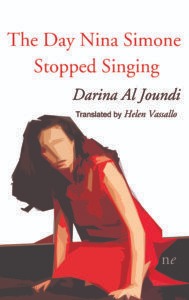
Peeing In The Font: The Day Nina Simone Stopped Singing By Darina Al Joundi, Trans. Helen Vassallo
“Watch out, Noun, the men in this country are monsters towards women. They’re hung up on appearances, they’re slaves to their customs, they’re nuts about God, they’re tied to their mother’s apron strings, and they’re obsessed with money. They spend their lives offering up their arses to God on a platter. They unzip their flies as if they were arming a machine gun. They let their dicks loose on women as if they were unleashing pitbulls. They’re dogs!”
From acclamation on the stage in France, the actor’s textual rendering of her own play, here translated with energy and authority by Helen Vassallo, appears in a new series from Naked Eye. Playing out in the partial form of an apostrophic address to her father, a profoundly secular academic, journalist and writer, Al Joundi’s story is as flagrantly immediate as her treatment of an internecine conflict demands. Taking her father’s cue for indiscriminate cynicism, Noun’s vocal denunciation of all kinds of religious intolerance and misogyny must have resounded like an echo in a sharply acoustic theatre, and her bravery – first to countenance criticism in a real landscape of orthodoxy, and second, in its theatrical re-envisioning – is her eloquence.
The thread which unites daughter, father and drama, is the music of Nina Simone whose deeply human expression anchors Noun’s stolid sense of identity in memory. Punctuated with her song ‘Sinnerman’, whose repeated strains refract the experiences and attitudes of the protagonists, the story unfolds into a hall of mirrors where certainties are compromised by recrimination, and carefully-nourished truths are later renegotiated.
In the maelstrom of Beirut, Bohemian polyglots consume Gibran alongside Rimbaud, Lacan with Sartre, feeding an impulse for existential freedom, the freedom to name names, to think independently of the kinds of men - and they are always men - who dictate the terms of endurance for others:
“A believer, my dear, is a ball-breaker who makes other people’s lives hell to get to heaven”.
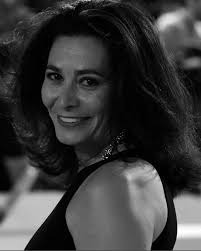
Darina Al Joundi
For most of all, Al Joundi’s story is one of love, stoicism and resilience. The means of survival in dark times – enacted so often in the citizenry of memory – is the cocking of a snook at the tableau of Israeli F-14s tearing the sky and eyeless shells of apartment blocks. The indifference is both shocking and salutary: the greyness of unwashed skin, the ironic fear of cockroaches in a terrain of cluster bombing, the counter-intuitive obsession with a televised football international as missiles whip past the windows. And, the growing of Noun into a new skin of adolescence, of menstruation, and the carpe diem of fucking for the sake of fucking in a war zone.
A bildungsroman in dystopia, the retailing of Al Joundi’s journey is necessarily comedic in places since dark humour naturally inheres to the woodwork of landscapes in turmoil. Helen Vassallo’s inventory of names for ‘dicks’ in translation is tireless in both assiduity and accuracy, but yields an obvious countertone in the suggestion of promiscuity. The narrator’s tone is insouciantly defiant rather than disingenuous, a declaration of another kind of war on aggressive phallocentrism. A response to the defining depredations of a terrain, and culture, in flux, her monologue is entirely natural, an upping of the ante to countermand antagonism squarely. We should not cavil as we hear echoes of erotic-thanatic impulses in the lethal urgency of circumstances, if only because this stylized performance is intended to do for complacent misogyny what Lysistrata did for the Athenian military.
Al Joundi’s peroration on the meaning and disposition of dicks is the prelude to a brutal, abusive relationship with a photojournalist whose obsession with filming the mutilated dead amounts to a mental disturbance made concrete in outbursts of uncalibrated anger. And a harrowingly wrought depiction of a game of Russian Roulette, played out in the lunatic maelstrom of free-basing and self-destruction, where anticipation overcomes fear to yield a perfect illustration of the Sex/Death axis: “I wasn’t afraid, it was exciting, I felt as if I was going to come”. The random acts of violence that punctuate the narrative – the prison cell horrors, the sudden shootings – would be rendered deafening in the near silence of an auditorium, and we are reminded that Al Joundi’s mandate as witness is to collapse the flimsy walls of the theatre to expose the limits of degradation in a world beyond comfortable margins
Also by Steve Whitaker...
Poem Of The Week: From Cheshire By Kit WrightPoem Of The Week: Among The Talk And The Laughter By Norman MacCaig (1910-1996)Understanding The Stone: The Green Parcel By John ChallisPoem Of The Week: Soirée By Peter Reading (1946-2011)Children's Poem Of The Week: Catamaran Smile By Carmella de Keyser“Dear Lord, please don’t let my daughter become a whore, she smokes marijuana and shows her breasts in public. Dear Lord, she’s mad, please heal her”.
The problem is more fundamental than we know. Al Joundi’s dangerous, self-lacerating and profoundly exposed journey of liberation demands to be heard. An actress by inclination, the power of her performance of Nina Simone has Stopped Singing on stage can only be imagined.
The Day Nina Simone Stopped Singing, translated by Helen Vassallo is published by Naked Eye
More information here: https://nakedeyepublishing.co.uk/uncategorized/the-day-nina-simone-stopped-singing/
The shortened address for this article is: newspub.uk/01e1e