


search
date/time

Fri, 7:00PM
light rain
15.8°C
SSE 6mph
light rain
15.8°C
SSE 6mph
 | Sunrise | 4:14AM |
| Sunset | 7:47PM |  |

Steve Whitaker
Features Writer
@stevewhitaker1.bsky.social
P.ublished 6th April 2023
arts
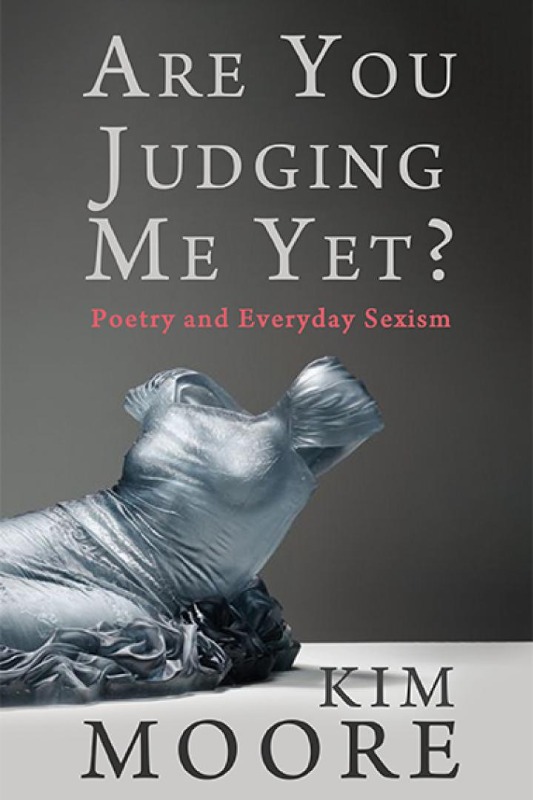
Review: Are You Judging Me Yet? Poetry And Everyday Sexism By Kim Moore
As a late middle-aged and in many ways unreconstructed working-class male, I tick several of the boxes that Kim Moore diligently avoids naming.
An intimate dialogue with her most recent collection, Are You Judging Me Yet is a compelling study of what it means to be objectified, to exist in a world whose limits are foreshortened by the predominating male gaze. Obliging her poetic self outwards, to embrace personal intuitions, epigrammatic précis, anecdotes and - characteristic of a book whose purview is deliberately thorough - contemporary theory, Moore’s narrative is no less than a ‘bricolage’ of ‘disparate paradigms’, emboldened immeasurably by the sheer weight and substance of ideas of which many of us remain woefully ignorant.Her view is neither withering nor complacent: an earnest and profoundly wise exploration, the writer’s journey is, by intention, also the reader’s, a voyage of uncovering, of revelation and of self-learning. Moore’s openness; her desire, for example, to conduct her study in a non-linear fashion whose randomness invites off-track investigation and pauses for reflection, thrives on suggestion: diversions are encouraged if mostly undirected, leaving the order of passage to the reader. And that passage is complex but liberating, causing the individual to reflect upon how attitudes to the poems (featured liberally here) and prose are shaped by a multiverse of preconceptions, including, but by no means limited to, considerations of gender, stereotype and race. The process is meant to be challenging:
‘I hope this book is both radically accessible and alienating, discomfiting and recognizable, new and repetitive, all at the same time.’
Am I discomfited? As a late middle-aged and in many ways unreconstructed working-class male, I tick several of the boxes that Kim Moore diligently avoids naming. And it is typical of this writer’s elan that she rarely targets her anger directly, opting, instead, to make her discussion inclusive, in order to address the promulgators of complacent abuse and sexism alongside its victims, the curious, the passively observant, and the men like me who are stuck on default settings. The turgid grind of routinely-administered sexism renders Moore’s thesis more or less impervious to criticism.
The frankness of the poet’s admission of having taking pleasure in the older man’s attention…
The term ‘anger’ is, in any case, entirely inadequate to describing Moore’s tone here. The unwieldy but strangely methodical presentation lets dialogue and debate air, gives the writer distance, and in so doing extracts the sting of disorder and self-destructiveness. Marshalling a battery of heavyweight theorists, and a compelling inventory of both general and personal experiences, Moore negotiates her way towards conviction. And the journey is both articulate and convincing, underlining the unexpected efficacy of her own eloquent bricolage.If her narrative is tentative it is because her method is reconstructive. The writer deliberately re-engages with personal pain in order, in part, to rebuild herself, to be ‘changed in the writing of it’. Acknowledging the presence of female desire, of complicity, in a discourse that is, by definition, multivalent, Moore’s sincerity is one component of an impulse for change and betterment, for supporting the general good. One senses, in the open-ended nature of the negotiation, a willingness always to listen and to bravely commit, as though a turning of the cards was reified by the honesty of self-exposure. The interspersing of poems amongst the prose distils that negotiation, yields a higher truth in the very complexity of accompanying emotions. Poem no. 7 of All the Men I Never Married recalls, with cine-film stillness, the wiping of a drop of water from the fifteen-year-old narrator’s thigh in an unsolicited moment on the log flume. The frankness of the poet’s admission of having taking pleasure in the older man’s attention…
‘And you are not innocent, you’re fifteen,
something in you likes that you were chosen.’
…renders his sense of power more invasive, his action more loaded with the complacent authority of control, and the object of his gaze unable to shift the imprint of the memory in perpetuity, even unto crippling self-doubt:
‘You remember this lesson your whole life,
that sliver/shiver of time, that moment in the sun.
What am I saying? Nothing. Nothing happened.’

Kim Moore
Such intellectual honesty is one of Moore’s strongest suits: the self-questioning at every stage of her passage, the open-minded willingness to consider the leaky rafts of criticism...
As I write I remain conscious that mine is a singular male view, one small opinion in the welter of reactions that Moore’s book will provoke. Her own hope, retailed above, shows deep prescience in its plenitude of expectations: this collection of ‘essays’, of extended impressions, amounts to a theatre of voices, a litany of complaints, a court of grievances seeking first, acceptance amongst males that a problem exists, and second, an emollient in the form of attitudinal change. Moore cannot disabuse herself of the male gaze to the point of disinterest; her audience must include men: ‘I want them to be confronted, to be disturbed, maybe even to be transformed’.The men and sometimes women she bangs her head against at poetry readings, are ‘well-meaning’ misinterpreters who, presented with the evidence, espy Moore’s intention through the wrong end of the telescope. Featuring widely in her book, it is to these that she directs an ambivalent eye – ambivalent because the ensuing dialogue is often disquieting; readings on the subject of everyday sexism are attended, at least to some extent, by unaware sexists. Amongst a gamut of emotions, including misplaced guilt at her own directness or sharpness of tone, audience questions yield a kind of conflicted incredulity in the poet, as if she were broaching entirely new ground whilst nosing the air for weakness in her own framework of argument. And to that degree her book is an ingress, no less than Woolf’s A Room of One’s Own (to which Moore properly alludes), pushing its way into the mainstream and describing a new way of seeing, as the novelist attempted to do at Newnham and Girton Colleges, Cambridge, in October 1928.
That men exert control by supposition and preconception is evidenced in the sheer ubiquity of the daily round of unsolicited attention...
Such intellectual honesty is one of Moore’s strongest suits: the self-questioning at every stage of her passage, the open-minded willingness to consider the leaky rafts of criticism – especially at readings – whose remnants remain afloat, but on the flimsiest of knee-jerk pretexts. And it is typical of her approach that her reaction to opprobrium should scale-up in direct proportion to the perceived seriousness or veracity of her antagonist’s opinion. Her fulsome and protracted reaction to an unnamed male poet’s criticism of one of her poems (‘I Let A Man’, no. 46) came to occupy one corner of her PhD thesis. The poet’s rejection of her poem, which was published in the New Statesman, reversed Moore’s collection’s central conceit by declaring that the poem in question objectified men, therefore undermining any claim to conviction her thesis might have harboured. Harnessing the seven-part extrapolation of ‘Objectification’ proposed by Martha Nussbaum, Moore’s response is incisive and thorough, skewering her antagonist on the sword of his own definition.Tangential to the ‘blindspot’ that the philosopher Judith Butler identifies between body and speech, or, in context here, the disconnection between Moore’s performance at a poetry reading and the ‘information’ that her body divulges in demeanour and in terms of male expectation, is another blindspot: a severe underestimation of the circumstances in which complacent sexist abuse might be deemed to have taken place. For Moore’s great skill is to identify its range and prevalence, from the interruptive bloke on the train who satisfies his own desire to talk by buttonholing the captive audience of a woman who is absorbed in a book, to the male audience member at the poetry reading who ‘thanks’ the poet for her efforts by noting how lovely she looks.
That men exert control by supposition and preconception is evidenced in the sheer ubiquity of the daily round of unsolicited attention. And although Moore has no interest in shaming those of us who propagate the routine unknowingly but without excuse, we are shamed notwithstanding. The repeated mantra in which poem number 6 of All the Men I Never Married is framed, accelerates the stages and varieties of abuse by candid accretion, rendering the violent denouement and the apparatus of recrimination that follow, transparently brutal. Brutal to the extent that the narrator’s vision is finally abandoned to the paternalistic discourse of those who control:
‘That being our bodies in public is a dangerous thing.
That being in public is a dangerous thing.
That our bodies are dangerous things.’
Kim Moore’s book is a seminal contribution to a necessary dialogue.
Are You Judging Me Yet? Poetry and Everyday Sexism is published by Seren.
For more information click here
For more information click here